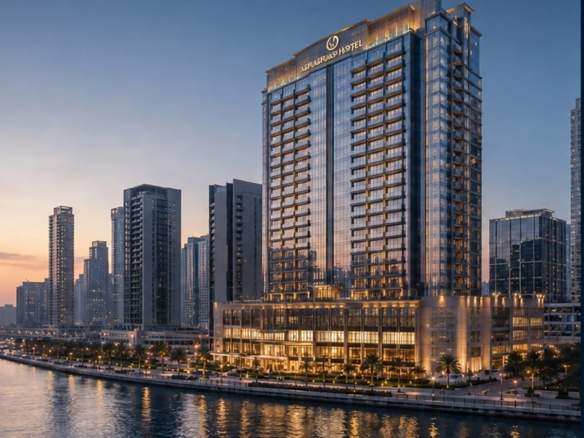
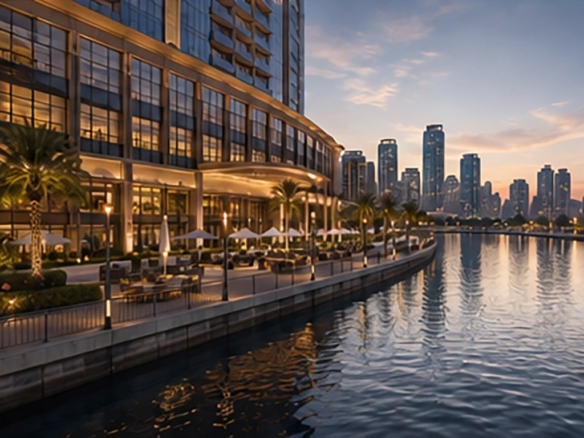
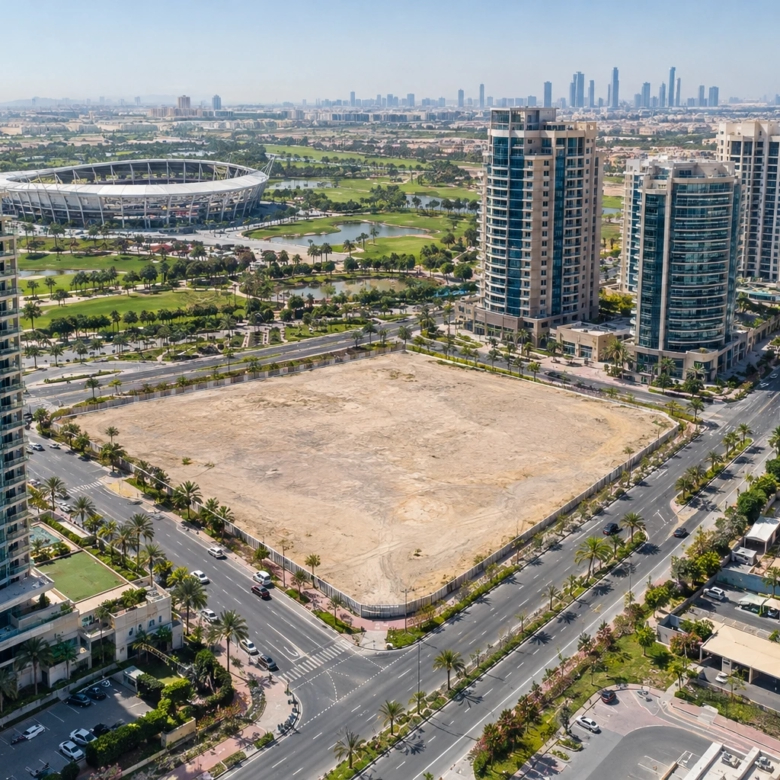
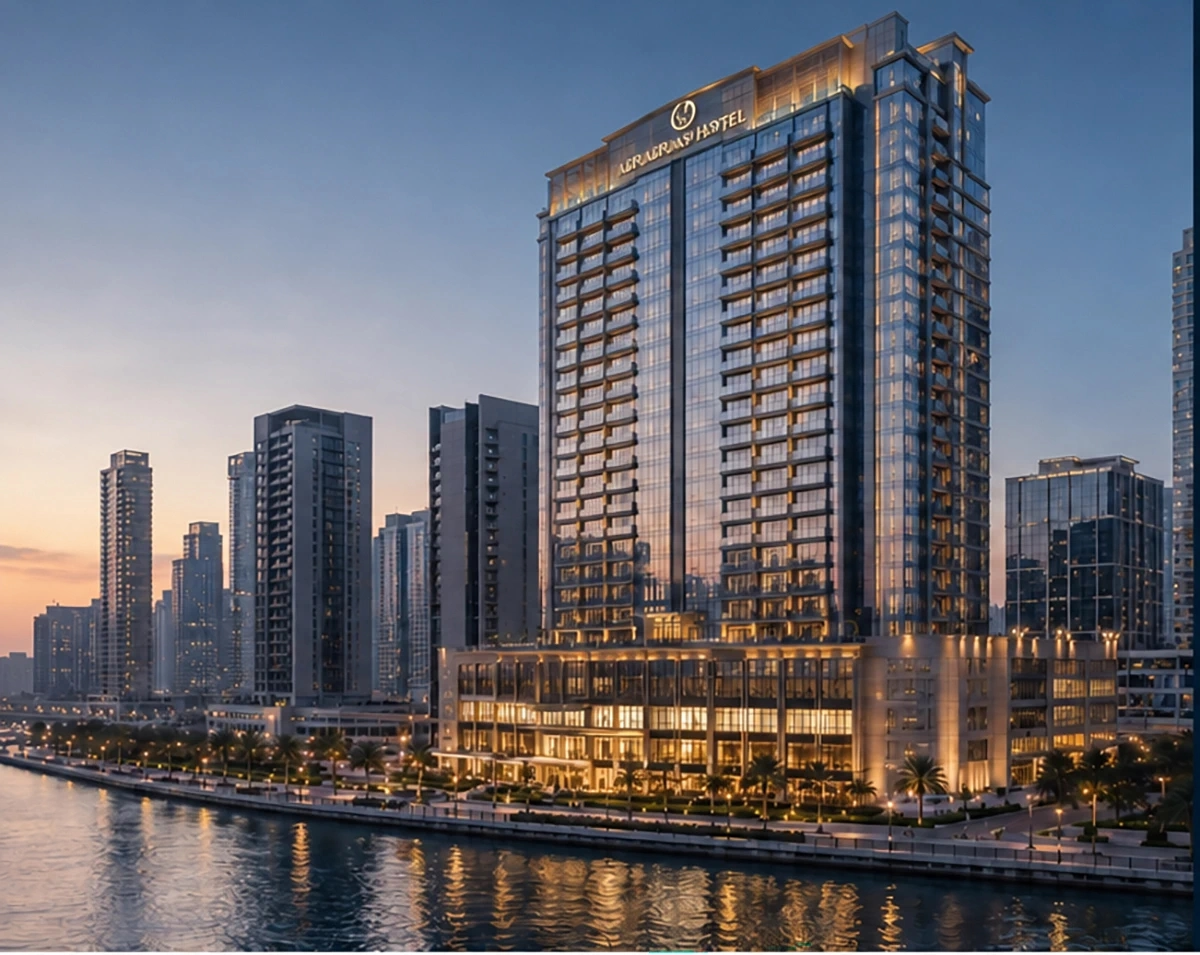
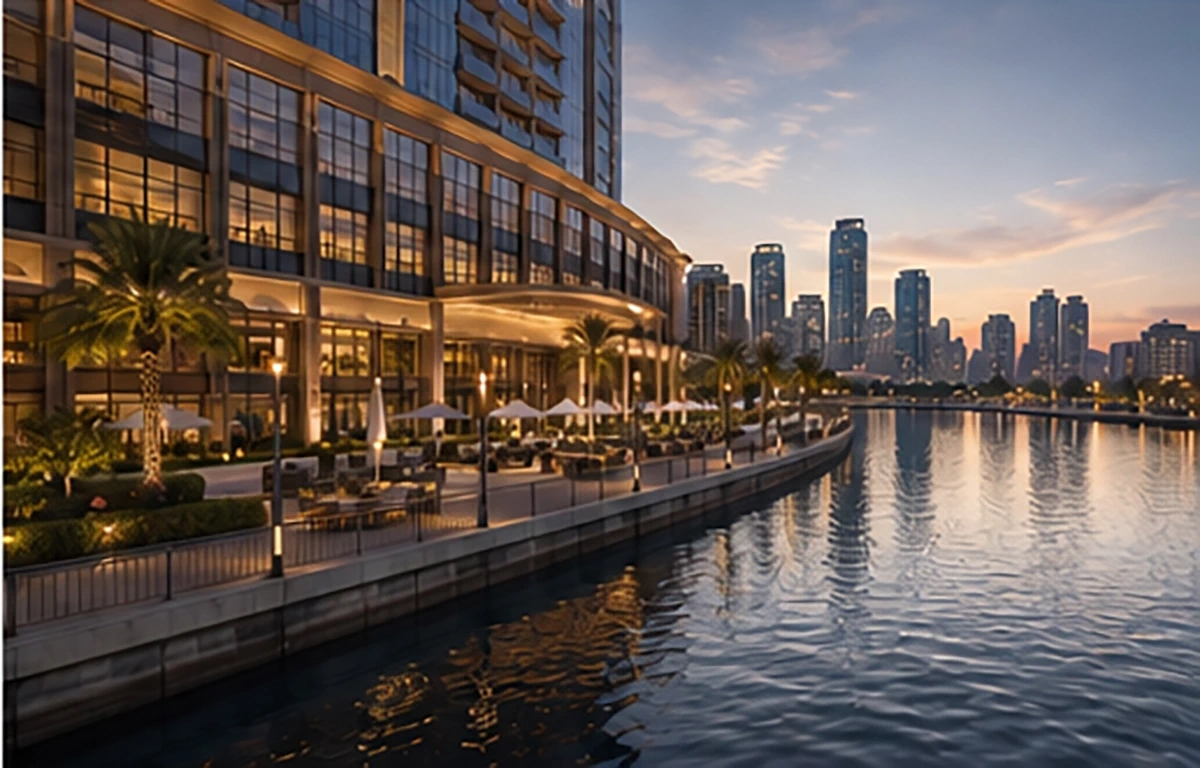
Hotel for sale in Dubai, water front / premium Location
G+3P+20
Plot size 40,000 sqf
BUA 295,000 sqf
Ground floor:
– lobby – Admin &Back office – coffee shop – Boutique shop – outlets (3 Nos).
Podium 01&02: car parking
Podium 03: Spa & Salon – English Pub – discotheque – Ball room – Arabic restaurant – outlet – business center – kitchen for floor
General information :
* 281 hotel rooms/suites
* 26 Executive Suites
* 145 Super Deluxe Suites
* 26 Deluxe Suites
* 78 Standard Suites
* 2 Presidential Suites
* 4 Royal Suites
* Specialist Restaurant
* All-Day Dining Restaurant
* Main Kitchen
* Outdoor Restaurant Seating
* Gym, Sauna, Jacuzzi and Steam facilities
* Swimming Pool
* Two Terrace Garden Outlets
* 100% Freehold ownership
* Approval for 4-star / 5-star hotel
* Fully furnished, including hotel outlets, kitchen, lobby
* Age 8 years
* asking price 450 million AEDRunning 4 star ⭐️ hotel for sale in Deira GCC
Plot size 39000 sqf
G+B+4 floors
Total rooms 250 rooms
Swimming pool
Meeting room
Business Center
Parking
All facilities
Asking price AED 80 million
ROI 10%Deluxe Hotel Apartment Dubai Deira
Located Dubai Deira near City Centre
2 basements parking +GR+M+11 floor
Ground Floor
Prestigious main lobby/reception/lobby Lounge
3 Elevators
2 Restaurants / Main kitchen/ Outside Shish area/ Saloon/ Shop/ Coffee shop
Mezzanine Floor
Manager Office/Backside Offices/ Account Office/Secretary
Swimming pool/4 meeting rooms/ Gym/ Sauna /Steam
Typical 9 floors
Total unites / 106
Executive Studio /28 unites /size- 39 sqM
Deluxe 1 Bedroom/ 28 units/size – 44 sqM
Superior 1 Bedroom/40 units/siza – 51 sqM
Royal 2 Bedroom/ 10 unites/ size -84 sqM
Total Plot Size – 23103 sqf
Total BUA – 168000 sqf
Market: GCC
Asking price: AED 140 Million
The Importance of Hotels and Hospitality in Dubai, UAE: Economic Growth, Commercial Development, Tourism, and Real Estate Investment Opportunities
Introduction: Dubai as a Global Hospitality Destination
Dubai, United Arab Emirates, has developed into one of the world’s prominent destinations for international tourism, business travel, luxury experiences, shopping, entertainment, and major events. Hotels and hospitality are central to this success. They provide accommodation for millions of visitors, support international business activity, create employment, attract investment, and generate demand for a wide range of related services.Dubai’s hospitality industry extends far beyond luxury hotels. It includes five-star resorts, business hotels, mid-market properties, budget accommodation, serviced apartments, holiday homes, branded residences, conference venues, restaurants, event spaces, wellness facilities, and specialised tourism experiences. This diversity allows the city to serve visitors with different budgets, travel purposes, and lengths of stay.The sector also has an important relationship with Dubai’s real estate market. Hotel buildings, hotel apartments, resort developments, and hospitality-oriented mixed-use projects can offer investment opportunities for property owners, developers, institutional investors, and private buyers. However, these investments differ significantly from ordinary residential property because their performance depends on operating costs, management quality, occupancy, room rates, brand positioning, and visitor demand.According to Dubai’s Department of Economy and Tourism, the emirate welcomed approximately 19.59 million international overnight visitors in 2025, a 5% increase compared with 2024. At the end of 2025, Dubai had 154,264 hotel rooms across 827 establishments. Average hotel occupancy reached 80.7%, while average daily room rates rose to AED 579. These figures illustrate the scale and international importance of Dubai’s visitor economy, although past performance does not guarantee future results.
1. The Economic Importance of Hotels and Hospitality
Hotels and hospitality contribute to Dubai’s economy through direct spending, employment, investment, and demand for goods and services supplied by other industries. A hotel is not simply a building containing guest rooms; it is an operating business connected to transport, food production, retail, construction, technology, maintenance, entertainment, and professional services.
Contribution to economic output
Accommodation and food services are a measurable part of Dubai’s economy. According to official Dubai government economic data, the sector generated approximately AED 15.9 billion in real gross domestic product in 2024, representing around 3.6% of Dubai’s total real GDP. The category includes restaurants and hotels and serves as one indicator of the wider tourism economy.Public Debt Management OfficeThe economic effect of hospitality also extends beyond this direct contribution. Visitors who stay in hotels may spend money on restaurants, shopping, transport, attractions, medical and wellness services, and entertainment. Businesses hosting conferences or international meetings may also purchase event services, catering, equipment, and accommodation for their delegates.This spending circulates through the local economy. Hotels purchase food and beverages, laundry services, cleaning products, furniture, maintenance, software, security, and other supplies. Their suppliers in turn employ staff and purchase additional goods and services. The scale of this indirect effect varies by property, procurement arrangements, and local supply chains.
Employment and professional development
Hotels create employment across a wide range of occupations, including reception, guest services, housekeeping, food preparation, restaurant management, engineering, maintenance, security, accounting, sales, marketing, reservations, and senior management.The industry also supports specialist careers in revenue management, hotel asset management, event planning, digital marketing, customer experience, and hospitality technology. These roles are important to the operation of hotels that serve international visitors and compete with destinations around the world.Large hotel developments create additional employment during construction, fit-out, furnishing, landscaping, and commissioning. Once operational, they require ongoing staffing and maintenance. This relationship between construction and operations connects hospitality to real estate development, architecture, engineering, contracting, and facilities management.
Foreign investment and international business confidence
Dubai’s hospitality market attracts international hotel brands, investment funds, property developers, operators, and private investors. A recognised international brand can bring operating systems, reservation networks, marketing reach, and customer loyalty, while a locally developed hotel may compete through pricing, location, design, or specialised services.Official Dubai reporting identified hotels and tourism among the leading sectors for estimated foreign direct investment capital flows during the first half of 2025. This demonstrates the sector’s importance to Dubai’s investment proposition, although the value of any particular project depends on its financial structure and commercial viability.Dubai Department of Economy & Tourism
2. Dubai’s International Tourism Market and the Role of Hotels
Tourism is one of the main sources of demand for hotel accommodation in Dubai. The city appeals to leisure travellers, families, couples, shoppers, beach holidaymakers, cultural visitors, sports fans, cruise passengers, and people travelling through the region for short stays.Hotels enable visitors to stay close to the attractions and facilities they intend to use. A beachfront resort serves a different purpose from a hotel in the financial district, near a convention centre, or beside a major shopping destination. This variety helps Dubai accommodate different travel budgets and purposes.
Leisure tourism
Leisure travellers visit Dubai for its beaches, shopping centres, restaurants, entertainment venues, architecture, desert experiences, and major attractions. Hotels often act as the base from which visitors organise these activities.Luxury hotels may offer private beaches, fine dining, spas, pools, and personalised services. Mid-market hotels focus on comfort, convenience, and value, while budget accommodation serves visitors who prioritise affordability and accessibility.The ability to serve different customer groups broadens the tourism market. It also means that investors should evaluate a hotel’s target market carefully rather than assuming that every property will benefit equally from Dubai’s international reputation.
Business tourism and corporate travel
Dubai attracts business travellers attending meetings, exhibitions, conferences, trade fairs, investor presentations, training programmes, and corporate events. Hotels serving this market may provide meeting rooms, conference halls, business services, dining facilities, and convenient access to commercial districts.Business hotels often compete on location, reliable service, transport convenience, meeting facilities, and the ability to accommodate group bookings. Their demand may be influenced by the calendar of international events, corporate travel budgets, and wider business conditions.Conference and exhibition activity can benefit more than the hotel itself. Delegates may also spend money on restaurants, taxis, retail, entertainment, and local business services. For investors, this creates potential demand for well-positioned properties near established commercial and event destinations, but actual performance must be confirmed using local operating data.
Family tourism and extended stays
Family visitors may prefer larger rooms, suites, serviced apartments, kitchen facilities, children’s activities, swimming pools, and convenient access to supermarkets and attractions. Visitors staying for several weeks or months may also seek laundry facilities, housekeeping, flexible accommodation, and a comfortable residential environment.This demand supports a range of accommodation models, including family-oriented resorts, all-suite hotels, serviced residences, and licensed holiday homes. These categories are not interchangeable: they may have different operating requirements, target customers, pricing structures, and regulatory obligations.
Events, sports, and entertainment
Dubai’s sporting events, concerts, exhibitions, festivals, and entertainment attractions can create peaks in accommodation demand. Hotels may benefit from advance bookings, group reservations, and visitors extending their stays around major events.However, event-related demand may be temporary. An investment appraisal should use annual performance data and realistic seasonal assumptions rather than relying on a single busy event period.
3. The Commercial Importance of the Hospitality Industry
The hospitality industry creates a commercial ecosystem that includes restaurants, cafés, catering companies, event organisers, transport providers, tour operators, wellness businesses, suppliers, and retail outlets.
Restaurants and food and beverage businesses
Restaurants are an important component of hotel revenue and Dubai’s visitor experience. Hotels may operate fine-dining restaurants, international buffets, cafés, lounges, poolside dining, room service, and catering operations. Some venues also attract local residents who are not staying at the hotel.Dubai’s varied culinary market creates opportunities for international restaurant brands, independent concepts, specialist cafés, and catering businesses. Potential customers include hotel guests, office workers, local residents, event attendees, and visitors seeking distinctive dining experiences.Investors should examine the restaurant’s seating capacity, average customer spending, operating hours, food costs, staffing expenses, rent or internal allocation of costs, and competition. A prestigious location does not automatically guarantee profitability.
Meetings, weddings, and event venues
Hotels with ballrooms, meeting rooms, outdoor event spaces, and specialist catering can earn income beyond overnight accommodation. Potential uses include weddings, private celebrations, product launches, corporate meetings, training sessions, and conferences.These activities can generate additional demand for food and beverage services, decorations, audiovisual equipment, event planning, and accommodation for attendees. Venues with flexible layouts and professional event teams may be able to serve several customer groups throughout the year.
Wellness, recreation, and guest services
Spas, gyms, swimming pools, beauty services, children’s clubs, and wellness programmes can strengthen a hotel’s appeal and create additional revenue streams. Some facilities serve hotel guests exclusively, while others may sell memberships or treatments to external customers, subject to the property’s business model and approvals.Hotel operators must balance the additional revenue potential against staffing, equipment, maintenance, energy, and space costs. Services should support the target customer and the overall positioning of the property.
Suppliers and support industries
Hotels require continuous supplies and services, including furniture, linen, food, beverages, cleaning products, laundry, air-conditioning maintenance, lifts, security systems, booking software, internet connectivity, and waste management.This creates opportunities for local and international suppliers. Companies that provide dependable service, consistent quality, competitive pricing, and specialist expertise can build long-term relationships with hotel operators.
4. The Main Types of Hotels and Hospitality Properties in Dubai
Dubai’s hospitality market contains several distinct property categories. Each has its own operating model, capital requirements, customer profile, and investment risks.
Luxury five-star hotels and resorts
Luxury properties typically compete through service standards, prime locations, design, room quality, restaurants, wellness facilities, and exclusive experiences. They may be positioned in Downtown Dubai, Dubai Marina, Palm Jumeirah, Jumeirah, and other established or emerging destinations.Luxury hotels can achieve high room rates when demand and positioning support them, but they can also involve substantial development costs, expensive fit-outs, larger staffing requirements, and demanding maintenance standards. Their financial performance depends on both pricing power and operating efficiency.
Four-star and mid-market hotels
Four-star and mid-market hotels serve business travellers, families, tourists, and customers who want a balance between comfort, facilities, and price. They may operate in commercial districts, near transport links, in mixed-use communities, or close to major attractions.This segment can appeal to investors seeking a broader customer base than an ultra-luxury property. Nevertheless, competition can be strong, particularly where many similar hotels target the same visitors.
Budget hotels
Budget hotels compete on affordability, clean rooms, convenient locations, and essential services. Their financial model generally depends on controlling operating costs while maintaining sufficient occupancy and guest satisfaction.A lower development cost does not necessarily make a budget hotel a better investment. The owner must examine achievable room rates, staffing costs, maintenance, online travel agency commissions, and the number of competing rooms in the local market.
Serviced apartments and hotel apartments
Serviced apartments and hotel apartments combine accommodation with some residential-style features. Depending on the property, these may include kitchen facilities, separate living areas, housekeeping, reception, and guest services.They may attract families, business travellers, consultants, project teams, and visitors staying for extended periods. Longer stays can reduce the frequency of room turnover, but the operating model, permitted use, and applicable licensing must be confirmed.Investors should distinguish between a licensed hotel apartment operation, a serviced residence, an ordinary residential apartment, and a holiday home. The marketing description alone does not establish the legal use or the owner’s right to operate short-term accommodation.
Boutique hotels and lifestyle properties
Boutique hotels often focus on a distinctive design, a specific neighbourhood, personalised service, cultural identity, or a specialist guest experience. Lifestyle hotels may combine accommodation with restaurants, entertainment, social spaces, wellness, and events.These properties can differentiate themselves from larger competitors, but their success depends on a clear market position, consistent service, effective marketing, and a sustainable cost structure.
Desert resorts and destination properties
Desert resorts and destination-style properties appeal to guests seeking nature, privacy, outdoor activities, and an experience different from a conventional city hotel. Their success may depend on the quality of the experience, transport access, environmental conditions, activity offerings, and the property’s ability to attract visitors beyond peak periods.Such projects may require specialist infrastructure, landscape management, water and energy planning, and careful consideration of environmental and development restrictions.
5. Real Estate Investment Opportunities in Dubai’s Hotel Sector
Hotel-related real estate investment can take several forms. Investors should first decide whether they want to own property, participate in the operating business, invest in a development project, or purchase a unit within a hospitality-oriented scheme. These approaches involve different rights, risks, and expected sources of income.
Opportunity one: Buying an operating hotel
Purchasing an existing hotel may give an investor access to an established building, operating history, staff structure, customer base, and management arrangements. Depending on the transaction, the purchase may involve the real estate, the hotel business, or shares in the owning company.A buyer should examine at least three years of available financial and operating records where possible. Important information includes occupancy, average daily rate, revenue per available room, room revenue, food and beverage income, payroll, utilities, maintenance, marketing costs, operator fees, insurance, and capital expenditure.The investor should also review the hotel’s brand and management agreements, licences, outstanding obligations, building condition, major equipment, renovation requirements, and any restrictions on the sale or transfer of the business.The headline purchase price is not enough to determine value. A hotel with high revenue but heavy debt, deferred maintenance, or an expensive management agreement may be less attractive than a property with lower revenue but stronger operating margins.
Opportunity two: Acquiring a hotel building with an established operator
Some investors prefer to own the property while an experienced hotel operator manages daily operations. The agreement may provide for a management fee, a lease payment, or a more complex structure involving fixed and performance-related components.The legal and commercial structure is crucial. A hotel management agreement does not necessarily guarantee a fixed income, and an operator’s brand does not eliminate market risk. Investors should understand who pays operating expenses, who funds renovations, how performance is measured, and what happens if the hotel underperforms.A long-term lease may offer greater income visibility if the tenant is financially strong and the lease is enforceable, but it creates counterparty risk. A management agreement may give the owner more direct exposure to operating performance, both positive and negative.
Opportunity three: Developing a new hotel
Hotel development can offer opportunities to create a property designed for a specific market, location, and operating strategy. Potential concepts include business hotels, mid-market accommodation, extended-stay properties, luxury resorts, and hospitality developments in emerging destinations.However, hotel development is complex and capital-intensive. Feasibility depends on land cost, permitted use, room count, room sizes, back-of-house space, parking, access, construction cost, design standards, financing, brand requirements, and expected operating performance.A professional feasibility study should estimate the total development budget, opening schedule, operating ramp-up, revenue assumptions, operating expenses, debt servicing, replacement reserves, and exit value. The study should also test whether the project remains viable if room rates or occupancy are lower than expected or construction costs rise.Investors should not assume that an area with strong tourism growth automatically needs another hotel. Existing supply, future projects, seasonality, transport access, and the intended customer segment all influence the feasibility of a new development.
Opportunity four: Hotel apartments and hospitality-oriented units
Some developments offer individual units associated with hotel or serviced-accommodation operations. These may appeal to investors seeking exposure to visitor accommodation without acquiring an entire hotel building.Before purchasing, buyers should confirm the exact legal structure, title and ownership rights, permitted use, management agreement, operator fees, service charges, maintenance obligations, revenue-sharing formula, and any restrictions on personal use or resale.Projected returns in sales brochures should be treated as estimates unless the contractual arrangement clearly defines the relevant payment obligation. Investors should ask whether the forecast is based on actual operating history, a guaranteed lease, or an illustrative calculation.
Opportunity five: Investing in hospitality-related land
Suitable land can be attractive to developers planning a hotel, resort, serviced residence, or mixed-use project. Location selection is especially important because hotel demand is closely linked to access, surrounding attractions, commercial activity, transport, and the visitor experience.A land acquisition should be supported by verified planning information, a concept design, a preliminary cost plan, a demand assessment, and a realistic operating model. The developer must confirm whether the intended hotel category and associated facilities are permitted on the plot.For brokerage and development transactions, due diligence should also cover the registered owner, title deed, plot boundaries, development controls, existing encumbrances, access rights, infrastructure connections, and any third-party interests. Commercial discussions should be supported by appropriate confidentiality and non-circumvention arrangements where required, while recognising that such agreements must be properly drafted and enforceable under applicable law.
6. Understanding Hotel Performance: Occupancy, Room Rates, and Revenue
Hotel investments should be evaluated using hospitality-specific financial indicators, not only the property’s physical value.Occupancy rate measures the proportion of available rooms sold over a given period. Higher occupancy can indicate strong demand, but it does not automatically mean that the hotel is profitable.Average daily rate (ADR) is the average room revenue earned per occupied room. A hotel may increase its ADR by attracting higher-paying customers, improving its positioning, or benefiting from seasonal demand. However, excessive pricing can also reduce bookings.Revenue per available room (RevPAR) measures room revenue per available room, whether occupied or not. It combines occupancy and average daily rate and is useful for comparing hotel room performance. It does not include all other hotel revenue or account for operating expenses.Dubai’s official 2025 figures provide a useful market reference. Average occupancy reached 80.7%, average daily rate was AED 579, and RevPAR reached AED 467. These citywide figures are not forecasts for a particular hotel; individual properties can perform significantly above or below the market average.Dubai Department of Economy & Tourism
A simple hotel investment example
Consider a hypothetical hotel with 100 rooms, an average daily rate of AED 500, and an annual average occupancy rate of 70%.
Available room nights per year: 36,500.
Occupied room nights: 25,550.
Estimated annual room revenue: AED 12,775,000.
This calculation covers room revenue only. It does not include restaurant income, meetings, events, or other services, and it does not deduct payroll, utilities, management fees, maintenance, insurance, marketing, financing, or other expenses.The hotel’s actual financial performance will depend on its operating model and cost structure. A detailed feasibility study should estimate total revenue, departmental expenses, operating profit, capital expenditure, financing costs, and the return on the total investment.
7. Key Locations for Hotel and Hospitality Investment in Dubai
Dubai’s hospitality opportunities vary by location. Investors should match the property concept to the area’s main sources of demand.
Downtown Dubai
Downtown Dubai attracts visitors interested in major landmarks, shopping, restaurants, entertainment, and premium urban accommodation. Hotels in this area may target leisure travellers, business visitors, families, and guests seeking proximity to central attractions.Land and property costs can be substantial, so buyers should assess whether achievable room rates and occupancy justify the acquisition or development cost.
Dubai Marina and Jumeirah Beach Residence
Dubai Marina and Jumeirah Beach Residence combine waterfront living, restaurants, beaches, leisure activities, and residential communities. These characteristics can support demand from leisure travellers, couples, families, and visitors seeking a lively coastal environment.Investors should examine seasonal demand, competing hotels and holiday homes, parking, beach access, and the precise location of each property.
Palm Jumeirah
Palm Jumeirah is strongly associated with luxury resorts, beachfront accommodation, upscale dining, and premium visitor experiences. It may suit investors considering high-end hospitality assets or resort-related development.The capital required can be substantial, and high operating standards can add to the cost of maintaining the property. Investors should carefully assess the target customer, competitive position, management arrangements, and the property’s long-term maintenance requirements.
Business Bay and Sheikh Zayed Road
Business Bay and the Sheikh Zayed Road corridor can appeal to hotels serving corporate travellers, consultants, event attendees, and leisure visitors seeking access to central Dubai.Potential advantages include access to commercial districts, offices, restaurants, and major road connections. However, the precise distance to business destinations, traffic conditions, parking, and access to public transport can materially influence a hotel’s appeal.
Dubai South, Dubai Islands, and emerging destinations
Emerging districts may present opportunities for investors seeking land, new hotel projects, or hospitality developments in areas expected to grow over time. These investments can involve different risk profiles from established tourist districts.In October 2025, Dubai’s Department of Economy and Tourism announced a Hotel Incentive Programme designed to stimulate new hospitality development in designated future-growth areas, including Dubai South, Palm Jebel Ali, Dubai Parks, and Dubai Islands. Investors considering these locations should verify the programme’s current status, eligibility rules, qualifying project types, and application conditions directly with the relevant authority before relying on any incentive in a financial model.Public Debt Management Office+1An emerging location may offer a lower entry cost, but its success depends on infrastructure delivery, surrounding development, transport access, the pace of demand growth, and the amount of competing hotel supply. Investors should use conservative assumptions and allow for a potentially longer period before a new hotel reaches stable operations.
8. Legal, Licensing, and Operational Considerations
Hotel and hospitality projects require more than property ownership. Investors must confirm the applicable approvals and legal requirements for the proposed business model.Depending on the project, these may include planning and building approvals, hotel classification requirements, tourism establishment licensing, fire and life-safety compliance, food-service approvals, environmental requirements, employment obligations, and other operational permits.A hotel apartment, a holiday home, an ordinary residential unit, and a purpose-built hotel may be subject to different rules. The intended activity must be verified before acquisition or development.For an existing hotel, due diligence should examine licences, contracts, management agreements, employee obligations, supplier arrangements, outstanding liabilities, building compliance, and any restrictions affecting a transfer of ownership or business operations.For a development project, the buyer should confirm the permitted use, gross floor area, height restrictions, parking requirements, access, infrastructure capacity, construction approvals, and any relevant master-community requirements.Professional legal, technical, tax, financial, and hospitality advice can help identify issues that may not be evident from a sales brochure or an initial site visit.
9. Risks and Challenges in Dubai’s Hotel Market
Dubai’s hospitality sector offers a range of opportunities, but hotel ownership and development carry substantial risks.Competition and new supply: Additional hotel rooms can put pressure on occupancy and room rates, especially in locations where several properties target the same visitors.Seasonality: Demand can vary with weather, holidays, business events, school calendars, and international travel patterns. Annual forecasts should account for both peak and quieter periods.Operating expenses: Payroll, utilities, maintenance, insurance, marketing, management fees, and replacement of furniture and equipment can reduce the income available to the owner.Capital expenditure: Hotels require periodic refurbishment to maintain their standards and competitiveness. A building that appears profitable before renovation may need substantial additional investment.Financing and interest rates: Debt servicing can materially affect cash flow. Investors should assess whether the project can withstand lower revenue or higher financing costs.Operator and brand risk: An established brand does not guarantee successful operations. Management fees, brand standards, contract terms, and the operator’s performance can influence the owner’s return.Construction and approval delays: New developments may face higher construction costs, delayed openings, or changes in market conditions before the property starts generating revenue.International travel and economic uncertainty: Hotels depend on visitors’ willingness and ability to travel. Changes in airline capacity, regional conditions, consumer spending, or business confidence can affect demand.Resale and liquidity: A hotel is a specialised asset, and the number of potential buyers may be smaller than for ordinary residential property. Selling a hotel may require extensive financial disclosure and a longer transaction process.Investors should stress-test their assumptions. A viable project should be assessed not only under favourable conditions but also under scenarios involving lower occupancy, reduced room rates, higher costs, and delayed opening.
10. A Practical Investment Checklist
Before buying an operating hotel, hotel apartment, hospitality unit, or development plot, investors should establish the following:
Ownership and title: Confirm the registered owner, title deed, legal structure, and any relevant restrictions.
Permitted use: Verify that the intended hospitality activity is legally allowed.
Market demand: Review visitor profiles, nearby attractions, business demand, competing accommodation, and future hotel supply.
Financial performance: Obtain reliable operating records where available and distinguish actual results from projections.
Total investment cost: Include acquisition, registration, renovation, furnishing, professional fees, financing, and working capital.
Operating structure: Understand the hotel operator’s role, management fees, lease obligations, brand requirements, and performance arrangements.
Building condition: Arrange technical inspections covering structure, air conditioning, lifts, fire systems, kitchens, pools, and other major equipment.
Financial feasibility: Calculate expected cash flow, operating profit, net income, debt obligations, and the return on total capital invested.
Exit strategy: Consider the likely resale market, holding period, contractual restrictions, and possible alternative uses.
Independent professional advice: Obtain appropriate legal, financial, engineering, and hospitality advice before committing to the transaction.
Conclusion: Hotels and Hospitality as a Pillar of Dubai’s Economy and Property Market
Hotels and hospitality play a major role in Dubai’s economic development, international tourism, commercial activity, and real estate investment landscape. The industry supports employment, attracts capital, serves international business and leisure visitors, and creates demand for restaurants, retail, transport, events, construction, and professional services.Dubai’s hospitality market includes luxury resorts, business hotels, mid-market accommodation, budget hotels, serviced apartments, boutique properties, and new development opportunities. This diversity allows investors to explore different strategies, from acquiring an operating hotel to developing a new property or purchasing a hospitality-oriented asset.The most suitable investment depends on the investor’s objectives, capital, risk tolerance, and experience. An existing hotel may provide operating history, while a new development may offer greater flexibility but carries planning, construction, financing, and market risks. A hotel apartment may require less capital than a whole hotel but still involves legal, management, and operational considerations that must be understood before purchase.The key to a successful hospitality investment is to combine a strong location with verified market demand, realistic financial assumptions, sound management, careful legal due diligence, and sufficient capital for ongoing operations and refurbishment.Dubai’s international tourism profile provides an important foundation for the sector, but individual investments must stand on their own financial merits. By examining the property, operator, customer segment, costs, and long-term market conditions, investors can make more informed decisions about opportunities in Dubai’s hotel and hospitality real estate market.
Our company relies on the information provided by Developer's to convey property details to our clients accurately. While we make every effort to ensure the correctness of this information, we want to emphasize that we operate as intermediaries and we issue a disclaimer regarding the accuracy of property information details. Any discrepancies, errors, or omissions in the information provided by the developer are unintended and unintentional. Our role is to convey the details as received, and we recommend that clients independently verify the information to their satisfaction.
Additionally, with respect to the presence of inventory, it is understood that availability may change dynamically. The information on current inventory levels provided by the developer is subject to fluctuations, and we cannot guarantee real-time accuracy.
Palmyra Properties
Contact me
تم تعطيل تسجيل المستخدم لغرض العرض التجريبي.
Forgot Password
الرجاء إدخال اسم المستخدم أو عنوان البريد الإلكتروني. سوف تتلقى رابطًا لإنشاء كلمة مرور جديدة عبر البريد الإلكتروني.




 Hotels create employment across a wide range of occupations, including reception, guest services, housekeeping, food preparation, restaurant management, engineering, maintenance, security, accounting, sales, marketing, reservations, and senior management.The industry also supports specialist careers in revenue management, hotel asset management, event planning, digital marketing, customer experience, and hospitality technology. These roles are important to the operation of hotels that serve international visitors and compete with destinations around the world.Large hotel developments create additional employment during construction, fit-out, furnishing, landscaping, and commissioning. Once operational, they require ongoing staffing and maintenance. This relationship between construction and operations connects hospitality to real estate development, architecture, engineering, contracting, and facilities management.
 Tourism is one of the main sources of demand for hotel accommodation in Dubai. The city appeals to leisure travellers, families, couples, shoppers, beach holidaymakers, cultural visitors, sports fans, cruise passengers, and people travelling through the region for short stays.Hotels enable visitors to stay close to the attractions and facilities they intend to use. A beachfront resort serves a different purpose from a hotel in the financial district, near a convention centre, or beside a major shopping destination. This variety helps Dubai accommodate different travel budgets and purposes.
 Dubai attracts business travellers attending meetings, exhibitions, conferences, trade fairs, investor presentations, training programmes, and corporate events. Hotels serving this market may provide meeting rooms, conference halls, business services, dining facilities, and convenient access to commercial districts.Business hotels often compete on location, reliable service, transport convenience, meeting facilities, and the ability to accommodate group bookings. Their demand may be influenced by the calendar of international events, corporate travel budgets, and wider business conditions.Conference and exhibition activity can benefit more than the hotel itself. Delegates may also spend money on restaurants, taxis, retail, entertainment, and local business services. For investors, this creates potential demand for well-positioned properties near established commercial and event destinations, but actual performance must be confirmed using local operating data.
 The hospitality industry creates a commercial ecosystem that includes restaurants, cafés, catering companies, event organisers, transport providers, tour operators, wellness businesses, suppliers, and retail outlets.
 Dubai’s hospitality market contains several distinct property categories. Each has its own operating model, capital requirements, customer profile, and investment risks.
 Serviced apartments and hotel apartments combine accommodation with some residential-style features. Depending on the property, these may include kitchen facilities, separate living areas, housekeeping, reception, and guest services.They may attract families, business travellers, consultants, project teams, and visitors staying for extended periods. Longer stays can reduce the frequency of room turnover, but the operating model, permitted use, and applicable licensing must be confirmed.Investors should distinguish between a licensed hotel apartment operation, a serviced residence, an ordinary residential apartment, and a holiday home. The marketing description alone does not establish the legal use or the owner’s right to operate short-term accommodation.
 Desert resorts and destination-style properties appeal to guests seeking nature, privacy, outdoor activities, and an experience different from a conventional city hotel. Their success may depend on the quality of the experience, transport access, environmental conditions, activity offerings, and the property’s ability to attract visitors beyond peak periods.Such projects may require specialist infrastructure, landscape management, water and energy planning, and careful consideration of environmental and development restrictions.
 Hotel-related real estate investment can take several forms. Investors should first decide whether they want to own property, participate in the operating business, invest in a development project, or purchase a unit within a hospitality-oriented scheme. These approaches involve different rights, risks, and expected sources of income.
 Hotel development can offer opportunities to create a property designed for a specific market, location, and operating strategy. Potential concepts include business hotels, mid-market accommodation, extended-stay properties, luxury resorts, and hospitality developments in emerging destinations.However, hotel development is complex and capital-intensive. Feasibility depends on land cost, permitted use, room count, room sizes, back-of-house space, parking, access, construction cost, design standards, financing, brand requirements, and expected operating performance.A professional feasibility study should estimate the total development budget, opening schedule, operating ramp-up, revenue assumptions, operating expenses, debt servicing, replacement reserves, and exit value. The study should also test whether the project remains viable if room rates or occupancy are lower than expected or construction costs rise.Investors should not assume that an area with strong tourism growth automatically needs another hotel. Existing supply, future projects, seasonality, transport access, and the intended customer segment all influence the feasibility of a new development.
 Hotel investments should be evaluated using hospitality-specific financial indicators, not only the property’s physical value.Occupancy rate measures the proportion of available rooms sold over a given period. Higher occupancy can indicate strong demand, but it does not automatically mean that the hotel is profitable.Average daily rate (ADR) is the average room revenue earned per occupied room. A hotel may increase its ADR by attracting higher-paying customers, improving its positioning, or benefiting from seasonal demand. However, excessive pricing can also reduce bookings.Revenue per available room (RevPAR) measures room revenue per available room, whether occupied or not. It combines occupancy and average daily rate and is useful for comparing hotel room performance. It does not include all other hotel revenue or account for operating expenses.Dubai’s official 2025 figures provide a useful market reference. Average occupancy reached 80.7%, average daily rate was AED 579, and RevPAR reached AED 467. These citywide figures are not forecasts for a particular hotel; individual properties can perform significantly above or below the market average.Dubai Department of Economy & Tourism

 Dubai Marina and Jumeirah Beach Residence combine waterfront living, restaurants, beaches, leisure activities, and residential communities. These characteristics can support demand from leisure travellers, couples, families, and visitors seeking a lively coastal environment.Investors should examine seasonal demand, competing hotels and holiday homes, parking, beach access, and the precise location of each property.
 Palm Jumeirah is strongly associated with luxury resorts, beachfront accommodation, upscale dining, and premium visitor experiences. It may suit investors considering high-end hospitality assets or resort-related development.The capital required can be substantial, and high operating standards can add to the cost of maintaining the property. Investors should carefully assess the target customer, competitive position, management arrangements, and the property’s long-term maintenance requirements.
 Business Bay and the Sheikh Zayed Road corridor can appeal to hotels serving corporate travellers, consultants, event attendees, and leisure visitors seeking access to central Dubai.Potential advantages include access to commercial districts, offices, restaurants, and major road connections. However, the precise distance to business destinations, traffic conditions, parking, and access to public transport can materially influence a hotel’s appeal.
 Emerging districts may present opportunities for investors seeking land, new hotel projects, or hospitality developments in areas expected to grow over time. These investments can involve different risk profiles from established tourist districts.In October 2025, Dubai’s Department of Economy and Tourism announced a Hotel Incentive Programme designed to stimulate new hospitality development in designated future-growth areas, including Dubai South, Palm Jebel Ali, Dubai Parks, and Dubai Islands. Investors considering these locations should verify the programme’s current status, eligibility rules, qualifying project types, and application conditions directly with the relevant authority before relying on any incentive in a financial model.