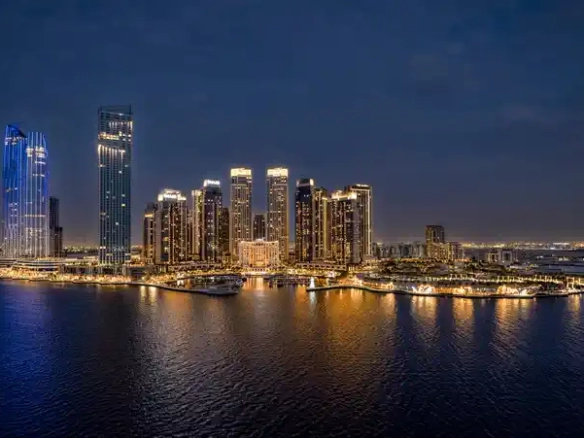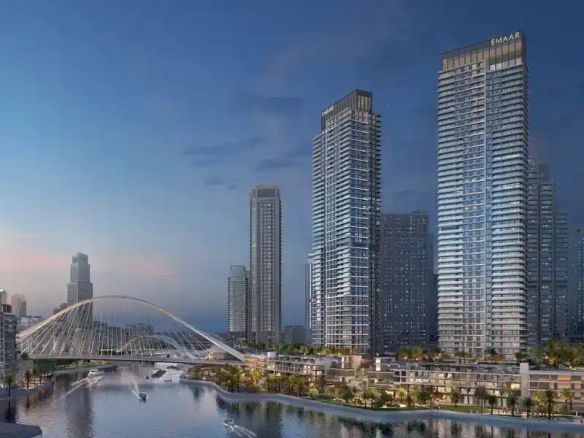

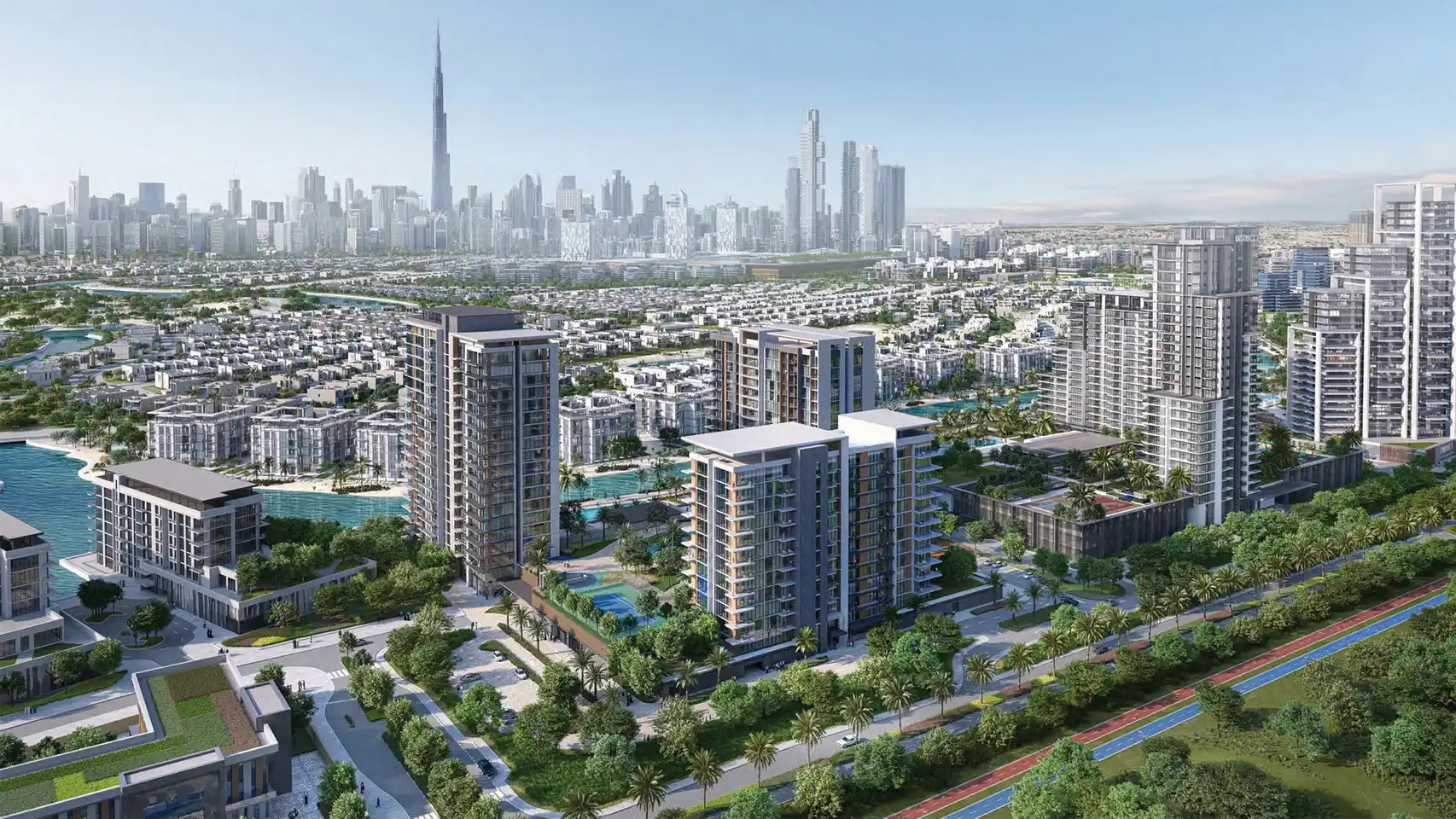
Dubai has evolved from a regional property destination into one of the world’s most dynamic and internationally recognized real estate investment markets.
In 2026, Dubai’s appeal is supported by a powerful combination of economic growth, international investment, population expansion, tourism, world-class infrastructure, strategic urban planning, regulatory development and a diverse range of property opportunities.
For investors considering apartments, villas, luxury residences, commercial properties, hotels, development land, off-plan projects or joint ventures, Dubai offers multiple investment strategies across an increasingly sophisticated market.
The question is no longer simply whether to invest in Dubai real estate, but rather where to invest, what to acquire, when to enter and how to structure the investment.
Dubai Real Estate Market: Strong Momentum in 2026
Dubai’s real estate market entered 2026 with substantial momentum.
According to the Dubai Land Department, total real estate transactions reached AED 252 billion during the first quarter of 2026, representing a 31% year-on-year increase in value. The number of real estate transactions also increased by 6%, reaching 60,303 transactions, while real estate investments reached AED 173 billion across 57,744 transactions.
These figures demonstrate the continuing strength of investor confidence and the depth of liquidity within Dubai’s property market.
The market’s scale also provides opportunities across multiple segments, including:
- Luxury and ultra-luxury residences
- Apartments and villas
- Branded residences
- Off-plan developments
- Ready properties
- Commercial real estate
- Hotels and hospitality assets
- Serviced apartments
- Development land
- Industrial and logistics properties
- Joint-venture development opportunities
The strength of Dubai’s property market therefore comes not only from price performance, but from the breadth and diversity of opportunities available to investors.
A Diversified Economy Supporting Real Estate
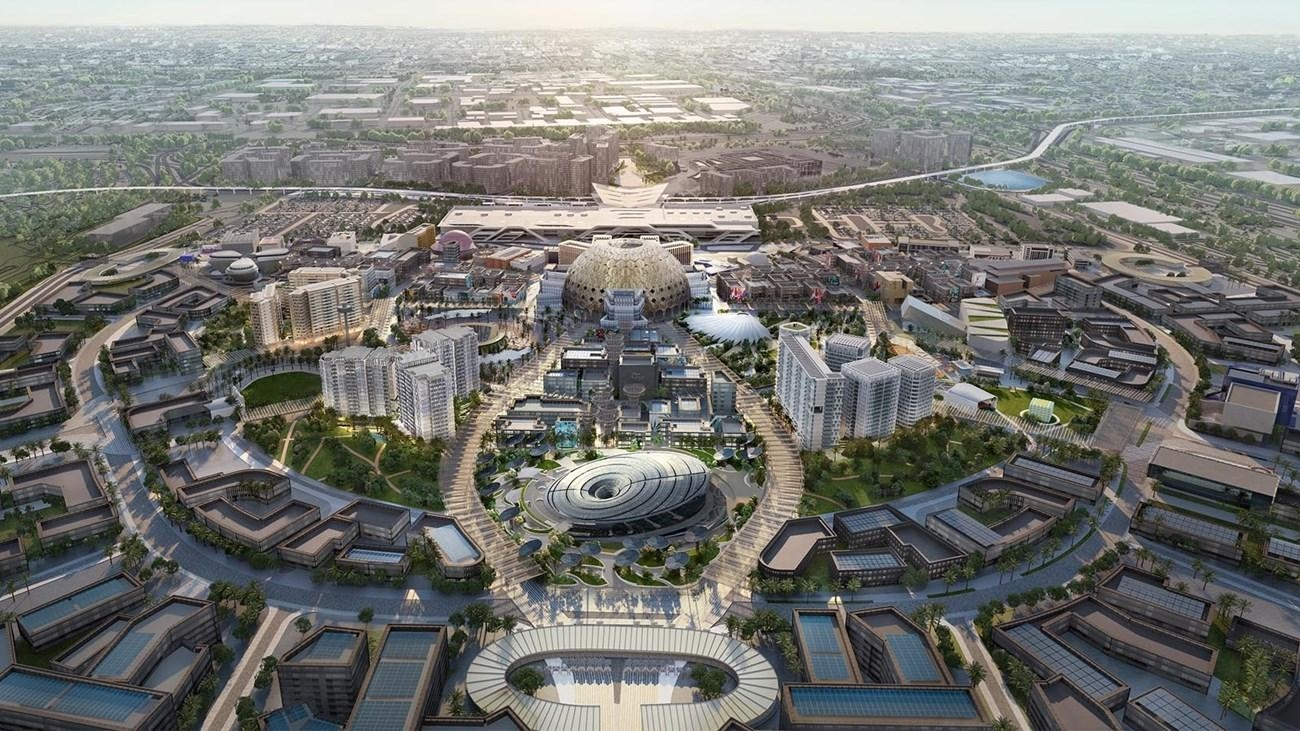
Dubai’s real estate market is closely connected to the emirate’s broader economic growth.
Dubai has successfully developed a diversified economy supported by tourism, aviation, international trade, logistics, financial services, technology, construction, hospitality, professional services and real estate.
Dubai’s real GDP reached approximately USD 255.3 billion in 2025, recording real growth of around 5%. The emirate’s estimated population reached approximately 4.6 million in 2025, further supporting long-term demand for residential and commercial property.
Real estate remains an important contributor to this economic expansion. During the first nine months of 2025, Dubai’s real estate sector grew by 6.7%, contributing approximately 8.2% of GDP, with a value added of AED 29.1 billion.
For property investors, this diversification is particularly important.
Real estate demand is supported by employment growth, business expansion, population growth, international migration, tourism and continued infrastructure investment rather than depending on a single economic sector.
Dubai’s Global Tourism Engine
Tourism is another major pillar supporting Dubai’s real estate ecosystem.
Dubai welcomed 19.59 million international overnight visitors in 2025, representing a 5% increase over 2024 and marking the emirate’s third consecutive record-breaking year for international tourism.
Tourism generates direct and indirect demand for:
- Hotels
- Hotel apartments
- Serviced residences
- Short-term rental properties
- Luxury residences
- Retail destinations
- Restaurants
- Entertainment venues
- Waterfront developments
Dubai also welcomed approximately 2 million international overnight visitors in January 2026, representing a further 3% increase compared with January 2025.
This continued tourism expansion strengthens the long-term fundamentals of strategically located residential and hospitality assets.
For investors, properties positioned near major attractions, beaches, business districts, entertainment destinations and transportation networks can benefit from multiple sources of demand.
World-Class Infrastructure and Connectivity
One of Dubai’s greatest competitive advantages is its infrastructure.
Dubai International Airport, major highways, metro networks, ports, logistics infrastructure and expanding transportation systems connect the emirate to major markets across Europe, Asia, Africa and the Middle East.
Infrastructure development also continues to reshape the city’s investment map.
The Dubai 2040 Urban Master Plan provides a long-term framework for sustainable urban growth, integrated communities, mobility, economic development and quality of life. The plan includes ambitious targets for public transportation, education, healthcare, green spaces, tourism and economic activities.
Among its objectives, Dubai 2040 aims for 55% of the population to live within 800 metres of a major public transportation station and allocates approximately 1.7 billion square feet for economic and industrial activities.
The plan also focuses investment and development around five major urban centres, supporting economic sectors, employment opportunities and integrated lifestyles.
For real estate investors, this is significant because infrastructure and urban planning can create new investment corridors and strengthen the long-term attractiveness of emerging communities.
Emerging Investment Destinations
Dubai’s investment story is no longer limited to its traditional prime locations.
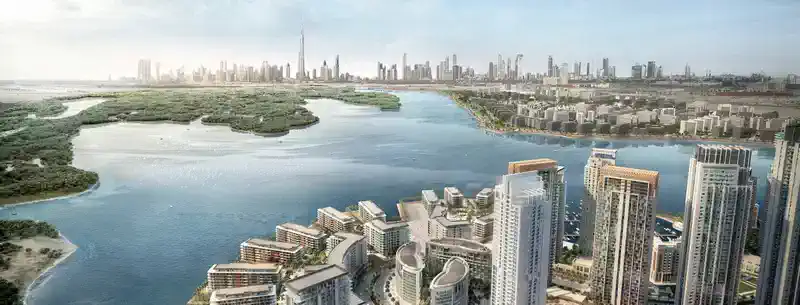
Established destinations such as Downtown Dubai, Palm Jumeirah, Dubai Marina and Jumeirah remain highly attractive, while emerging districts are creating new opportunities for investors seeking long-term growth.
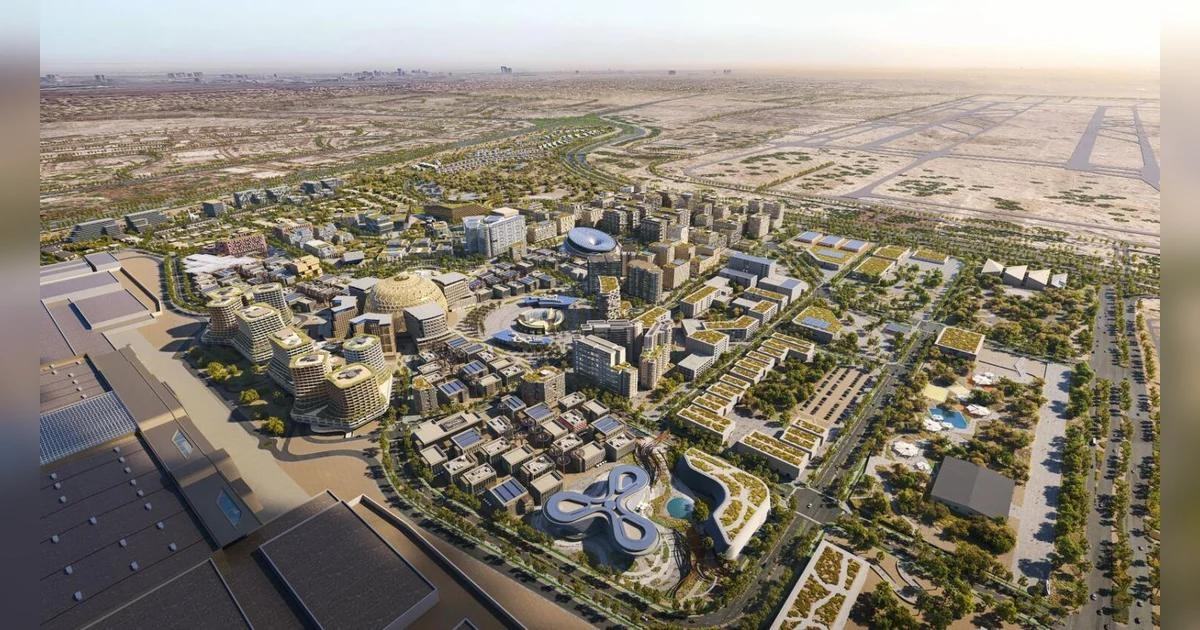
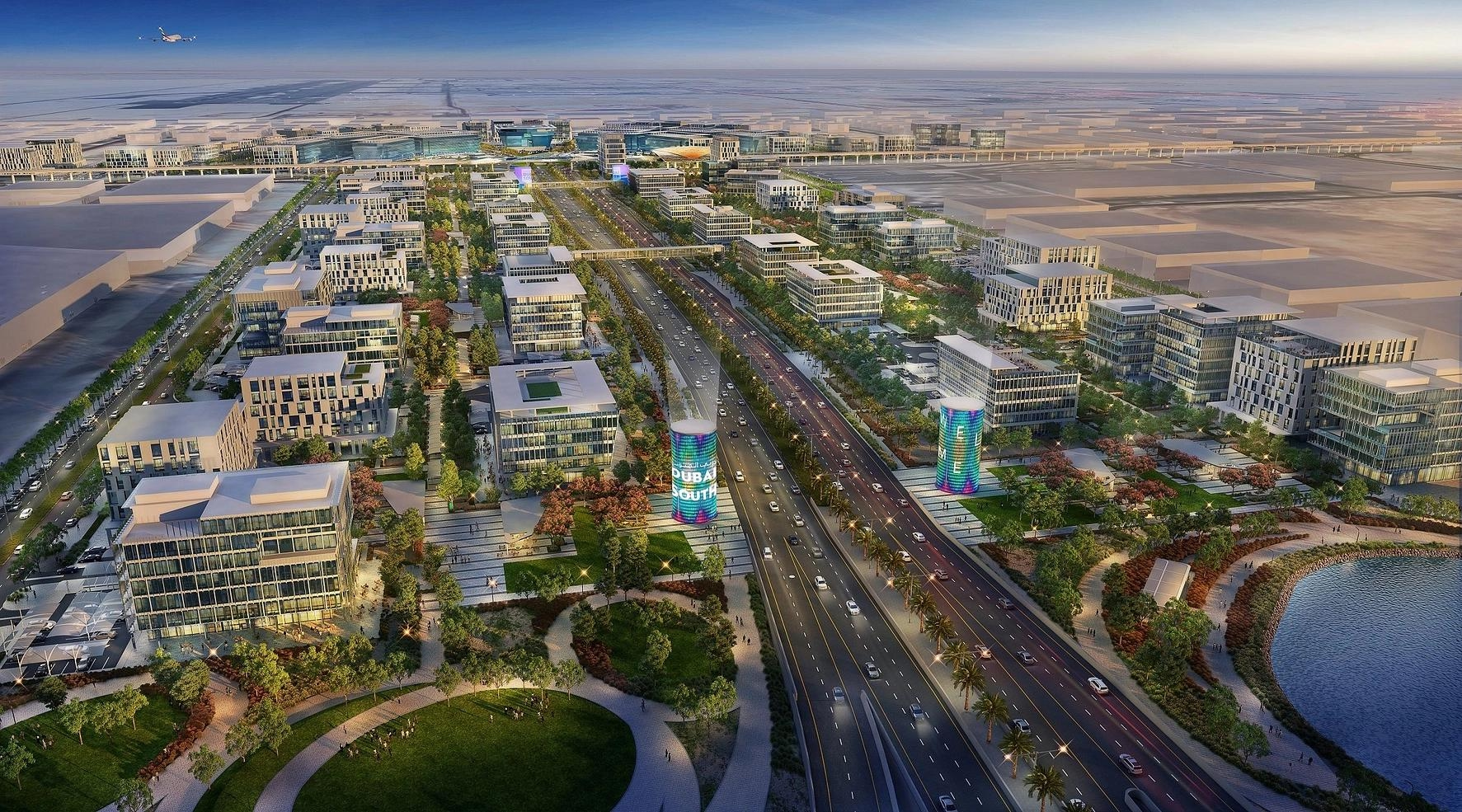
Areas such as Dubai South, Expo City Dubai, MBR City, Meydan, Dubai Islands, Palm Jebel Ali and other master-planned communities are increasingly relevant because of their relationship with infrastructure, tourism, business, logistics and future urban expansion.
The investment opportunity can therefore differ considerably from one location to another.
An investor should evaluate not only today’s property price, but also:
- Future infrastructure
- Population growth
- Accessibility
- Planned developments
- Existing and future supply
- Rental demand
- Tourism demand
- Developer reputation
- Exit opportunities
- Long-term capital appreciation potential
The right location can be just as important as the property itself.
Freehold Ownership and International Investors
Dubai’s freehold property framework has played an important role in establishing the emirate as a global real estate investment destination.
International investors can purchase property in designated freehold areas, providing access to residential, commercial and investment opportunities in one of the world’s most internationally connected cities.
Depending on their objectives, investors can pursue several strategies.
Capital Appreciation
Investors can target properties in locations with strong development fundamentals and long-term demand, seeking capital growth over time.
Rental Income
Properties can be selected according to residential, corporate, tourism or short-term rental demand, creating potential recurring income.
Off-Plan Investment
Off-plan properties allow investors to enter projects during their development cycle, often with structured payment plans and the potential to benefit from capital appreciation before completion.
Development Investment
Experienced investors can acquire land or development opportunities for residential, commercial, hospitality or mixed-use projects.
Joint Ventures
Joint-venture structures can allow landowners, investors, developers and strategic partners to combine land, capital, expertise and development capabilities.
This diversity makes Dubai particularly attractive to investors with different financial objectives and risk profiles.
Off-Plan Real Estate Remains a Major Opportunity
Off-plan property continues to be one of the most significant components of Dubai’s real estate market.
The strong volume of off-plan activity reflects continued investor interest in new communities, master-planned developments and projects offered by established developers.
However, successful off-plan investment requires careful due diligence.
Investors should consider:
- Developer reputation and track record
- Project registration
- Escrow arrangements
- Payment schedule
- Construction progress
- Expected completion date
- Service charges
- Rental demand
- Comparable completed properties
- Future competing supply
- Location infrastructure
- Resale potential
- Exit strategy
The objective should not simply be to purchase an off-plan property.
The objective should be to identify a project where location, developer, pricing, demand, infrastructure and future supply support a compelling investment case.
Luxury Real Estate and Global Wealth
Dubai has also established itself as one of the world’s leading luxury residential markets.
High-net-worth individuals, entrepreneurs, international executives, business owners and families continue to seek premium residences in Dubai because of its combination of lifestyle, connectivity, security, infrastructure, hospitality and international business opportunities.
Prime locations such as Palm Jumeirah, Emirates Hills, Downtown Dubai, Dubai Marina and Jumeirah continue to attract international attention.
At the same time, emerging communities may offer investors a different proposition, particularly where entry prices remain comparatively attractive and significant future development is planned.
The most expensive property is not necessarily the best investment.
A more meaningful question is:
Which property offers the strongest combination of location, pricing, demand, income potential, future supply and long-term value?
Commercial Real Estate and Development Land
Dubai’s property market extends far beyond residential apartments and villas.
Commercial offices, retail assets, warehouses, industrial facilities, logistics properties, hotels, serviced apartments and development land all form part of the emirate’s expanding real estate ecosystem.
Dubai’s position as a global logistics, aviation, tourism and business hub creates demand for different categories of commercial property.
This creates opportunities for investors seeking income-producing assets as well as developers looking for land and larger development opportunities.
For experienced investors, development land and joint ventures can be particularly attractive because they provide access to larger projects and potentially greater value creation.
Strategic land opportunities in emerging growth corridors can offer exposure to Dubai’s long-term urban expansion.
Regulation and Market Transparency
Dubai’s real estate market has become increasingly structured and regulated.
The Dubai Land Department provides extensive real estate information covering transactions, properties, projects, valuations, rents, developers and other market data.
The regulatory environment has also continued to evolve alongside the growth of the market.
For investors, access to official information and transaction data provides a stronger foundation for due diligence and investment decision-making.
This is particularly important in a market where advertised prices and actual transaction values can differ considerably.
Professional investors should therefore analyse available market data rather than relying solely on promotional material.
Golden Visa and Long-Term Residency Benefits
Dubai’s real estate market also offers an additional strategic consideration for eligible international investors through the UAE residency framework.
The UAE Golden Visa provides long-term residency opportunities for qualifying investors subject to the applicable requirements and regulations.
For international property investors, residency can add an important lifestyle and business dimension to a real estate investment.
Property ownership can therefore represent more than a financial asset. For qualifying investors, it may also contribute to establishing a longer-term base in the UAE for themselves and their families.
Investors should always verify current eligibility requirements and conditions with the relevant UAE authorities before relying on residency benefits.
Why Dubai Remains Attractive in 2026
Dubai’s investment case is supported by several powerful fundamentals.
1. Economic Growth
A diversified economy continues to attract businesses, professionals, entrepreneurs and international capital.
2. Global Connectivity
Dubai’s geographical position and world-class aviation and logistics infrastructure provide exceptional access to international markets.
3. Population Growth
A growing population creates continuing demand for housing, retail, services and commercial space.
4. Record Tourism
Dubai welcomed 19.59 million international overnight visitors in 2025, reinforcing its position as a global tourism and hospitality hub.
5. Infrastructure Expansion
Continued investment in transportation, urban development and economic infrastructure is opening new investment corridors.
6. Diverse Property Opportunities
Investors can choose from apartments, villas, luxury residences, commercial properties, hotels, land, off-plan projects and joint ventures.
7. International Capital
Dubai continues to attract investors from a wide range of international markets.
8. Residency Opportunities
Eligible property investors may benefit from UAE long-term residency programmes subject to current requirements.
9. Long-Term Urban Planning
Dubai 2040 establishes a strategic framework for sustainable urban development and future growth. (Dubai 2040)
10. Multiple Investment Strategies
Dubai is not dependent on a single property type, location or investor profile.
This diversity gives investors the flexibility to build strategies around income, capital appreciation, development or long-term wealth preservation.
Invest Strategically, Not Emotionally
Despite Dubai’s strong fundamentals, real estate should never be considered a risk-free investment.
Property values, rental income, service charges, financing costs, construction timelines, future supply and market conditions can vary significantly between communities and individual projects.
Successful investment therefore requires more than choosing a famous location.
Investors should conduct appropriate due diligence, analyse actual transaction data, understand supply and demand, evaluate developers and projects, calculate acquisition and holding costs, and establish a realistic exit strategy.
The strongest opportunities are not necessarily the properties receiving the most publicity.
They are the properties where location, fundamentals, pricing, demand and future development align.
Dubai Real Estate in 2026: A Market Built for the Future
Dubai’s real estate market has entered a new stage of maturity.
The emirate combines economic diversification, international investment, record tourism, population growth, infrastructure expansion, long-term urban planning and an increasingly sophisticated real estate ecosystem.
The latest market data confirms that investor activity remains strong. Dubai recorded AED 252 billion in real estate transactions during Q1 2026, while real estate investments reached AED 173 billion during the same period. (dubailand.gov.ae)
At the same time, Dubai’s tourism sector continues to establish new records, with 19.59 million international overnight visitors recorded during 2025.
Together, these factors create a broad investment landscape extending from premium residential properties and income-producing assets to commercial real estate, hospitality, development land and strategic joint ventures.
The most important question for an investor is therefore not simply:
“Why invest in Dubai?”
It is:
“Where should I invest, what should I acquire, when should I enter and how should I structure the investment?”
At Palmyra Properties, we help investors identify and evaluate real estate opportunities aligned with their investment objectives, including residential properties, luxury real estate, commercial assets, development land, off-plan projects and strategic real estate partnerships.
Dubai continues to build for the future.
The right investment can become part of that future.