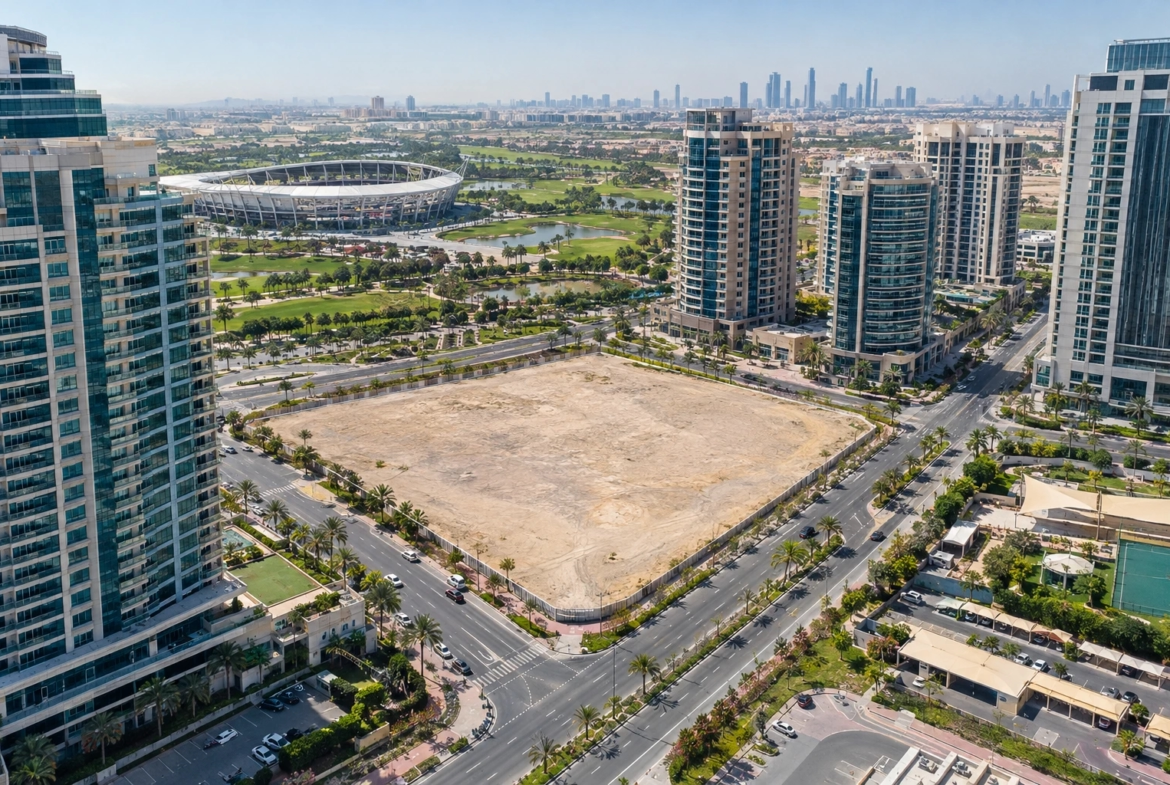
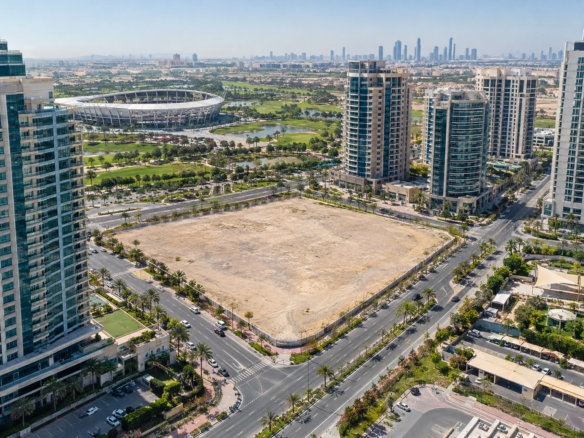
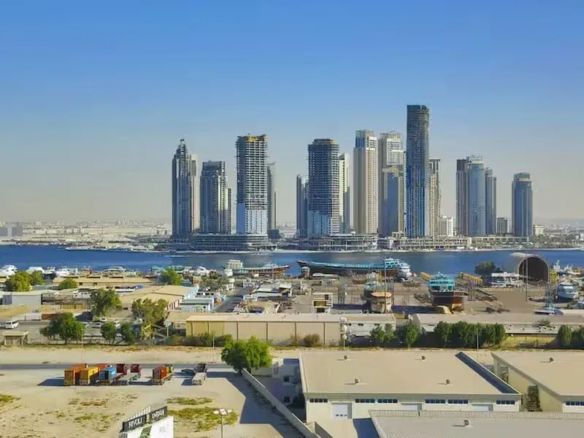
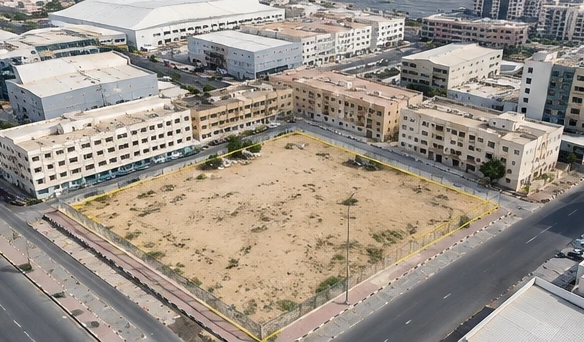
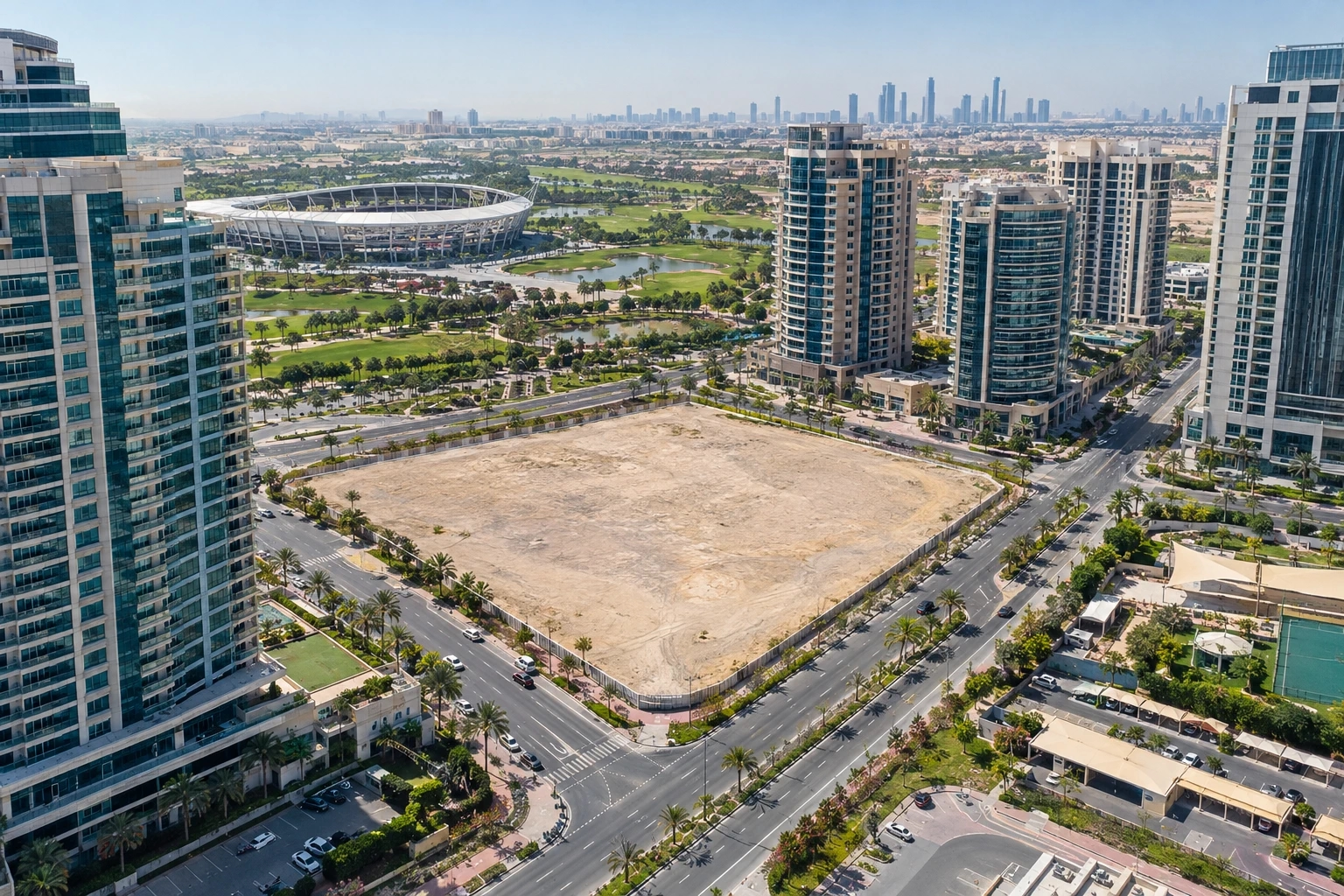
Dubai Sports City is a master-planned community in Dubai, United Arab Emirates, developed around the concept of combining sports, residential living, business activity, leisure, and community services. It offers a distinctive environment where sports facilities, residential apartments, villas and townhouses, retail outlets, restaurants, fitness centres, and educational services contribute to an integrated urban district.
The area forms part of Dubai’s wider strategy to develop specialised communities that attract residents, businesses, visitors, and investors. Its identity is closely associated with organised sports, training facilities, sporting events, and an active lifestyle. At the same time, its residential properties and everyday commercial services make it a functioning neighbourhood rather than a destination used only for sporting activities.
For property investors, Dubai Sports City can offer opportunities across several market segments, including apartments for long-term rental, family homes, short-term accommodation where permitted, retail units, offices, and selected development opportunities. The attractiveness of each investment depends on factors such as purchase price, building quality, service charges, occupancy, transport access, and competition from nearby communities.

1. Strategic Location and Connectivity
Dubai Sports City is situated in the western part of Dubai’s expanding urban area, within reach of major residential, commercial, and leisure districts. Its position allows residents and businesses to connect with other parts of the emirate through Dubai’s road network, including routes serving Al Khail Road and Sheikh Mohammed Bin Zayed Road, depending on the specific starting point and destination.
The community is also located near established and developing districts such as Motor City, Dubai Production City, Jumeirah Golf Estates, and other residential neighbourhoods in the wider Dubailand area. These surrounding communities contribute to the broader demand for supermarkets, restaurants, medical services, education, fitness, and other everyday facilities.
Connectivity is important to both residents and investors. Employees need practical journeys to workplaces, families value access to schools and essential services, and commercial operators depend on customer accessibility. For investors, the exact location of a property within Dubai Sports City can therefore influence rental demand and resale appeal.
Although road access is a major advantage, travel times vary according to traffic conditions, the time of day, and the destination. Investors should examine the specific building or plot rather than relying solely on the general location name.
2. Economic Importance of Dubai Sports City
Dubai Sports City contributes to the local economy by bringing together residential activity, sports-related services, hospitality, retail, fitness, and property management within one community. This mix supports a range of employment and business opportunities.
Sports, fitness, and professional training
Sports infrastructure is the defining feature of the district. The area is known for the Dubai International Cricket Stadium and a range of facilities associated with sports training and active recreation. These facilities help establish the community’s identity and can attract athletes, sports organisations, coaches, spectators, and visitors attending events.
The economic impact of sports extends beyond tickets and events. Sporting facilities may generate demand for coaching, training programmes, equipment, sportswear, food and beverage services, transport, accommodation, maintenance, and event management. Nearby businesses can benefit when sporting activities bring additional customers to the area.
The scale of this benefit varies according to event schedules, attendance, and the type of business. Investors should not assume that every property benefits equally from the stadium or sports facilities; the relationship is strongest when the property’s location, use, and customer base match the demand created by those activities.
Employment and supporting services
The community’s residential population supports a local service economy. Property management companies, maintenance contractors, supermarkets, cafés, restaurants, salons, fitness studios, medical providers, and other service businesses help meet everyday needs.
These activities create employment across different skill levels and business categories. They also make the district more convenient for residents, which can strengthen its appeal as a place to live.
For entrepreneurs, opportunities may exist in services that serve both residents and sports-oriented customers. Examples include specialist fitness services, healthy food outlets, sports recovery and wellness businesses, family-oriented recreation, and professional training. Commercial success will depend on suitable premises, licensing, rent, competition, and a clearly defined customer base.
3. Commercial Activity and Business Opportunities
Dubai Sports City’s commercial activity is closely connected to its residential population and sports identity. Rather than depending on one industry, the area can support businesses that serve households, visitors, athletes, and workers.
Retail and food services
Convenience retail is important in residential communities. Supermarkets, pharmacies, cafés, restaurants, bakeries, laundries, salons, and everyday service providers can benefit from repeat demand from residents. Businesses with easy access, visible storefronts, convenient parking, and a suitable tenant mix may be better positioned to attract customers.
Restaurants and cafés can also explore sports-oriented concepts, family dining, healthy meals, takeaway services, and event-related demand. However, operators must assess nearby competition, delivery-platform costs, foot traffic, operating expenses, and seasonal variations before committing to a lease.
Fitness, wellness, and sports-related businesses
The community’s sporting identity creates a natural market for gyms, personal training, sports academies, equipment retailers, physiotherapy and wellness providers, and specialist coaching services, subject to the relevant professional approvals and licensing requirements.
Businesses that combine a clear specialisation with convenient access may be able to distinguish themselves from general fitness operators. Before opening, a business owner should verify whether comparable services already operate nearby and whether the proposed premises meet the technical requirements for the intended activity.
Offices and professional services
Small offices and service-oriented commercial premises may appeal to property companies, sports businesses, consultants, training providers, and firms seeking a base near residential customers. Demand for office space depends on the availability of suitable units, rental costs, parking, building facilities, and access to clients.
Investors should verify the permitted use of any commercial unit, the building’s rules, and the applicable licensing conditions before purchasing or leasing it.
4. Tourism and Leisure Importance
Dubai Sports City is primarily a residential and sports-oriented community, rather than a traditional tourist district built around beaches, historic landmarks, or major shopping attractions. Nevertheless, sports can give the area a meaningful role within Dubai’s wider leisure and visitor economy.
Sporting events and visitor activity
Cricket matches and other sports activities can attract spectators, visiting teams, officials, coaches, and families. Depending on the event, these visitors may create demand for restaurants, taxis, retail services, and nearby accommodation.
This activity may provide opportunities for hospitality businesses and property owners whose units are suitable for temporary stays. However, visitor demand is event-dependent and should not be treated as constant throughout the year. Investors should assess actual booking performance, permitted rental arrangements, and operating expenses rather than relying on the existence of a stadium alone.
Active lifestyles and recreational facilities
Sports facilities, fitness centres, outdoor spaces, and organised training activities contribute to the area’s appeal for residents who prioritise exercise and recreation. This lifestyle positioning may be attractive to professionals, sports enthusiasts, and families looking for a community with leisure options close to home.
The wider Dubai region offers many additional attractions, entertainment venues, shopping destinations, golf facilities, and family activities. Dubai Sports City can serve as a residential base for visitors who prefer a community setting, provided their transport needs and itinerary are compatible with the location.
Hospitality and short-term accommodation
Apartments may appeal to visitors attending sports events, families visiting residents, or travellers seeking accommodation outside central tourist districts. The commercial viability of short-term letting depends on demand, building policies, licensing, management arrangements, cleaning and maintenance costs, and competition from hotels and other holiday homes.
Short-term rental income is not guaranteed to exceed long-term rental income. A realistic comparison should include vacancy periods, platform fees, utilities, furnishing, repairs, management charges, and any applicable regulatory requirements.
5. Residential Real Estate Investment Opportunities
Residential property is one of the most visible investment segments in Dubai Sports City. The community includes apartment buildings, family-oriented residential developments, and villa and townhouse communities. This variety allows investors to consider different budgets, tenant profiles, and holding strategies.
Studio apartments
Studio apartments may appeal to single professionals, individuals working in nearby districts, and tenants seeking relatively affordable accommodation. Their lower purchase prices compared with larger units can make them accessible to investors entering the Dubai property market.
A studio’s performance depends on its layout, usable space, building condition, service charges, parking arrangements, and the availability of similar units nearby. Investors should compare the total acquisition cost with realistic registered rents, rather than basing calculations only on advertised rental prices.
One-bedroom apartments
One-bedroom apartments can appeal to professionals, couples, and individuals who need more space than a studio offers. They may provide a balance between purchase cost, tenant demand, and the potential for long-term rental income.
Buildings with convenient access, well-maintained common areas, practical floor plans, and attractive amenities may be more competitive. Investors should also consider the number of comparable apartments being offered for rent in the same building.
Two- and three-bedroom apartments
Larger apartments may attract families, sharers where permitted, and tenants who require additional living or working space. Their rental values can be higher in absolute terms, but the purchase price, maintenance expenses, and tenant requirements are also greater.
For these properties, investors should assess bedroom sizes, storage, balconies, parking, noise levels, building amenities, and access to schools and daily services. A larger apartment is not automatically a better investment simply because its annual rent is higher.
Villas and townhouses
Villa and townhouse properties can appeal to families seeking more privacy, outdoor space, and a community-oriented environment. Their tenant profile may differ from that of apartment buildings, making them suitable for investors who prefer a longer-term family rental strategy.
Potential buyers should examine maintenance obligations, community charges, landscaping costs, property condition, and the availability of comparable homes. Because villas and townhouses can involve larger capital commitments, the number of potential tenants and the time required to secure a new lease should be considered carefully.
Canal Residence West and other established communities
Dubai Sports City contains several distinct residential projects, each with its own building design, amenities, maintenance record, and market position. Canal Residence West is one of the area’s recognisable residential locations, while Victory Heights is associated with family homes and a more spacious residential environment.
An investor should compare individual projects rather than treating all properties in Dubai Sports City as interchangeable. Two apartments with similar floor areas may have different values because of their views, floor level, service charges, layout, building quality, and resale liquidity.
6. Property Market Indicators and Rental Returns
Property investment decisions should be supported by current transaction evidence and realistic rental assumptions. Recent market-data websites using Dubai Land Department transactions and registered tenancy information show substantial activity in Dubai Sports City, although their figures vary according to the period covered, property categories, and calculation methods.
One dataset covering the 12 months to September 2026 reported a median registered sale price of approximately AED 955,000 across property types and a median price of AED 1,309 per square foot. It also reported a derived gross rental yield of approximately 7.71% for ready homes, calculated from matched median sale and rental data. These are broad market indicators, not a valuation of any particular unit.
The difference between gross and net rental yield is especially important. Gross yield is generally calculated by dividing annual rent by the purchase price. Net yield accounts for relevant operating expenses and is therefore more useful when estimating the income an investor may retain.
For example, an investor considering a property priced at AED 800,000 with an expected annual rent of AED 56,000 would calculate a gross yield of 7%. This is a hypothetical illustration, not a claim about a specific property or a guaranteed return.
The investor would then need to deduct service charges, maintenance, vacancy periods, property management fees, insurance where applicable, and other recurring costs. The actual net yield could be materially lower. Financing costs and acquisition expenses should also be included when evaluating the investor’s overall return.
Rental evidence should be checked against the property type, building, size, and lease conditions. Asking rents on property portals may differ from rents actually registered under tenancy contracts. Likewise, asking sale prices are not the same as completed transaction prices.
7. Commercial Property and Mixed-Use Investment
In addition to residential properties, investors may consider retail units, offices, hospitality-related premises, and other commercial spaces where the permitted use supports the intended business.
Retail shops
A well-positioned shop may benefit from the daily needs of residents and the presence of sports facilities. Potential tenants include cafés, convenience stores, salons, pharmacies, restaurants, and other service providers.
The most important factors are visibility, pedestrian access, parking, surrounding residential density, competing outlets, and whether the unit is approved for the proposed use. A shop with a strong location and a suitable tenant can be more attractive than a larger unit in a less accessible position.
Office and service premises
Office units may appeal to small businesses, consultants, property-related firms, sports service providers, and other companies seeking a local base. Investors should investigate existing tenant demand, building occupancy, unit layout, parking, service charges, and the availability of competing office space.
A commercial unit should not be purchased solely because it is described as being in a sports community. The business activity must be permitted, and the unit should suit the needs of likely tenants.
Hospitality and serviced accommodation
Some premises may be suitable for accommodation-related uses, subject to the applicable approvals and building rules. Sporting events and training programmes can create demand from visitors, but this demand can fluctuate significantly.
Before acquiring a property for hospitality or holiday-home use, investors should confirm the permitted activity, relevant tourism and licensing requirements, management arrangements, and realistic occupancy assumptions. They should also compare the investment with conventional long-term letting.
8. Land Acquisition and Development Opportunities
For developers and larger investors, land and development opportunities may provide a different route into the market. Depending on availability and planning permissions, potential strategies can include residential development, redevelopment, or selected mixed-use projects.
However, the existence of development activity in the wider district does not establish that any particular plot is available, buildable, or suitable for a proposed project. Each opportunity requires independent verification.
A land buyer should investigate the title deed, plot boundaries, permitted land use, development controls, gross floor area, building height, parking requirements, infrastructure connections, access roads, easements, and any applicable development or community obligations. Planning assumptions should be confirmed with the relevant authorities and qualified professionals.
For a development feasibility study, the purchase price is only one part of the equation. Construction costs, design and consultancy fees, approvals, finance, marketing, sales commissions, infrastructure works, contingency allowances, and the expected sales or rental revenue all affect viability.
Developers considering joint ventures should establish the landowner’s expectations, the respective financial contributions, the allocation of completed units or profits, decision-making powers, project milestones, and exit provisions before committing capital. Legal and financial due diligence is essential.
9. Who Is Most Likely to Benefit from Investing in Dubai Sports City?
Different investor profiles may find different opportunities in the community.
- First-time property investors: A carefully selected studio or one-bedroom apartment may offer a more accessible entry point, provided the investor has accounted for all acquisition and holding costs.
- Buy-to-let investors: Units with demonstrated rental demand, competitive service charges, and practical layouts may suit long-term leasing strategies.
- Family-focused investors: Larger apartments, villas, and townhouses may appeal to tenants seeking additional space and community facilities.
- Commercial investors: Retail or office premises may suit buyers who understand local business demand, tenant requirements, and commercial leasing risks.
- Developers and land investors: Suitable plots or development opportunities may warrant consideration where planning permissions, acquisition terms, construction economics, and demand support the project.
There is no single property type that is best for every investor. The correct choice depends on available capital, risk tolerance, expected holding period, financing, and the desired balance between rental income and potential capital appreciation.
10. Important Factors to Check Before Buying
A sound investment decision requires more than an attractive location or a promising rental estimate. Buyers should conduct a structured assessment before signing a purchase agreement.
Property ownership and legal status: Verify the title deed, registered owner, plot or unit details, and any mortgages or restrictions relevant to the transaction. Confirm that the property’s ownership structure and eligibility match the buyer’s circumstances.
Service charges and maintenance: Apartment and shared-community expenses can materially affect profitability. The Dubai Land Department provides a service charge index and guidance on jointly owned property expenses.
Building quality and management: Examine the condition of common areas, lifts, air conditioning, plumbing, parking, security, and other essential facilities. Review maintenance history and any known defects.
Rental demand and competition: Compare registered rents, current vacancies, competing listings, and tenant demand in the same building or community. Avoid assuming that a unit will always remain occupied.
Purchase costs and financing: Account for transfer and registration charges, brokerage fees where applicable, mortgage-related costs, furnishing, and initial repairs. Confirm the applicable fees directly with the relevant authorities and service providers.
Resale prospects: Consider the building’s age, reputation, location, floor plan, views, and supply of competing properties. A property with a reasonable entry price may still be difficult to resell if it has poor maintenance or limited buyer appeal.
Development and planning permissions: For land and development projects, independently confirm permitted uses, buildable area, approvals, infrastructure requirements, and the feasibility of the proposed scheme before committing funds.
The Dubai Land Department provides official services for property-sale registration and title deed verification. These should form part of the due diligence process.
11. Risks and Challenges
Dubai Sports City has several attractive characteristics, but investors should also understand its limitations.
One important consideration is competition. A large number of apartment buildings and similar units can give tenants greater choice and place pressure on rents, particularly where properties have comparable layouts and amenities. Investors should investigate supply within the specific building and its immediate surroundings.
Another consideration is transport convenience. The community is generally road-oriented, so residents may rely heavily on private cars, taxis, or other transport services. The practical journey to work, school, or major business districts can affect a tenant’s decision.
Sports-related demand also fluctuates. Major events can bring visitors and activity, but event calendars do not guarantee year-round demand for accommodation or commercial premises.
Property condition and service charges deserve particular attention. An older building with expensive maintenance or weak management may produce a lower net return than a newer or better-maintained property with a similar purchase price.
Finally, capital appreciation is never guaranteed. Property prices may rise or fall according to supply, demand, financing conditions, the wider economy, and the performance of individual developments. Investors should assess whether an investment remains financially viable under conservative assumptions.
12. The Future Outlook for Dubai Sports City
Dubai Sports City’s long-term appeal is closely linked to the continued use and development of its sporting facilities, the quality of its residential communities, and its ability to serve the daily needs of residents.
The area’s combination of sports venues, training academies, homes, restaurants, retail services, and recreational facilities gives it a recognisable identity within Dubai’s property market. Its official community information highlights sporting venues and academies alongside residential options ranging from studios to family villas, illustrating the breadth of its role.
Potential future opportunities may include improvements to existing properties, new residential projects where approved, specialist sports and wellness businesses, and commercial premises that meet the needs of a growing or changing local population.
However, investors should distinguish between existing facilities, formally announced projects, and speculative future expectations. Any anticipated improvement should be verified before it is included in a valuation or investment forecast.
13. Recommended Investment Strategies
For investors seeking a practical approach, several strategies may be worth considering.
Strategy one: Buy a ready apartment for long-term rental. Select a property with evidence of tenant demand, a competitive total acquisition cost, manageable service charges, and a realistic rental estimate. This approach may suit investors prioritising rental income over active development.
Strategy two: Target a property with improvement potential. A well-located unit that needs cosmetic renovation may offer an opportunity to improve its presentation and tenant appeal. The investor should obtain quotations and compare the expected post-renovation rent with the total investment cost.
Strategy three: Invest in family-oriented housing. Villas, townhouses, and larger apartments may suit investors targeting families who value space and community facilities. The analysis should include maintenance costs, leasing periods, and the size of the potential tenant market.
Strategy four: Consider a commercial unit. Retail or office investments may be appropriate for buyers who understand business leasing and can evaluate tenant demand, permitted use, fit-out requirements, and vacancy risk.
Strategy five: Evaluate development opportunities. Experienced developers may investigate suitable land or development projects, provided the legal status, planning parameters, construction budget, exit strategy, and financial structure have been independently assessed.
Each strategy should be supported by a written feasibility study. Investors should compare conservative, expected, and optimistic scenarios and calculate the net return after expenses rather than relying on gross yield alone.
Conclusion: Dubai Sports City as a Sports, Residential, and Investment Destination
Dubai Sports City occupies a distinctive position in Dubai because it combines a sports-oriented identity with residential communities, commercial services, fitness facilities, restaurants, and leisure activities. Its sports infrastructure can attract athletes and visitors, while its homes and everyday services support a functioning residential economy.
From an economic perspective, the area supports sports-related activity, property management, retail, hospitality, fitness, and other services. Commercial opportunities may exist for businesses that understand the needs of residents and sports participants. From a tourism perspective, sporting events and training facilities contribute to Dubai’s wider leisure offering, although visitor demand should not be confused with the consistent tourism demand found in established hotel districts.
For real estate investors, opportunities range from studios and apartments to villas, townhouses, retail units, offices, and selected development projects. The most suitable investment depends on the buyer’s budget, intended holding period, risk tolerance, and the specific property’s legal status, condition, rental demand, and operating costs.
The strongest investment approach is to focus on verified information, realistic financial assumptions, careful property selection, and professional due diligence. Dubai Sports City may offer worthwhile opportunities for investors seeking exposure to Dubai’s residential and sports-oriented property market, but every acquisition should be assessed on its own merits.