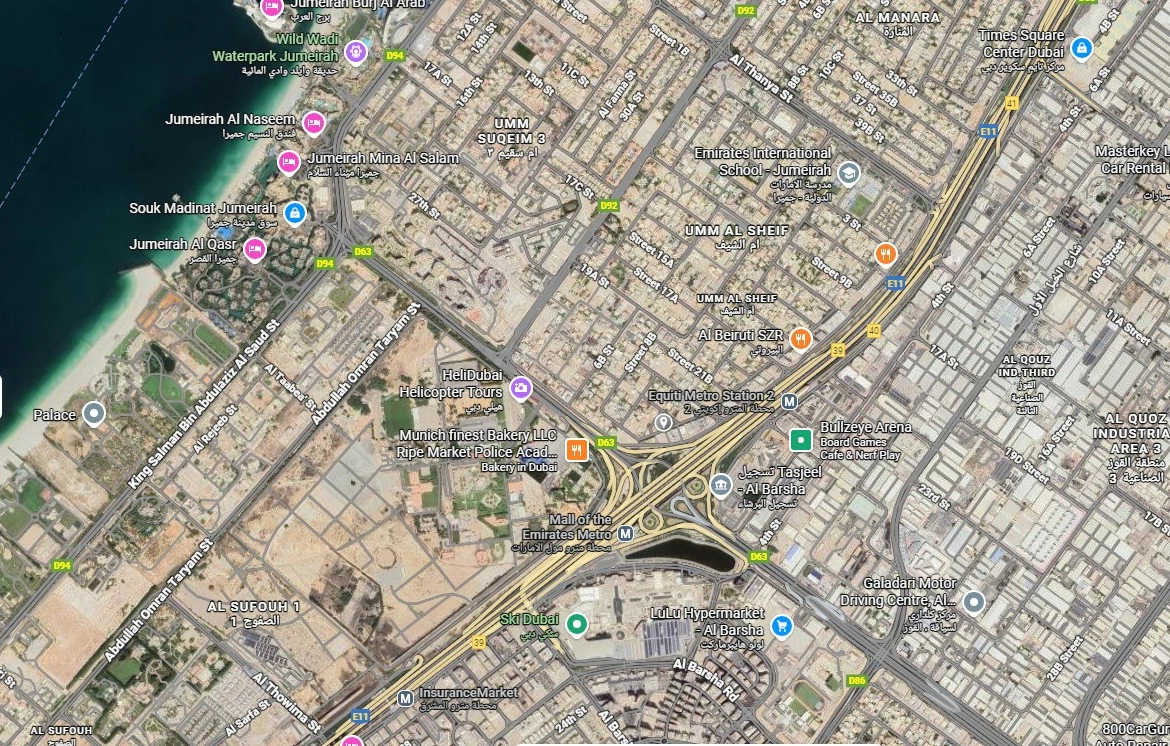
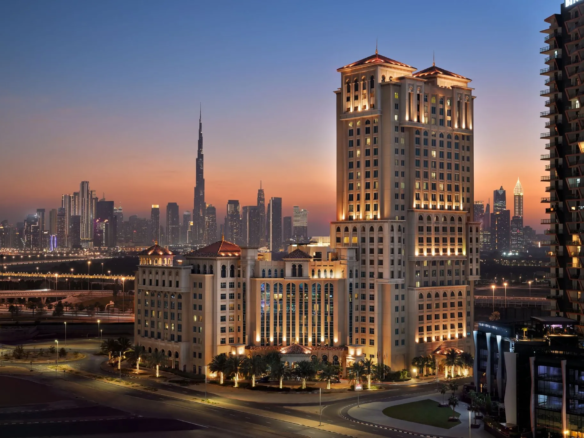
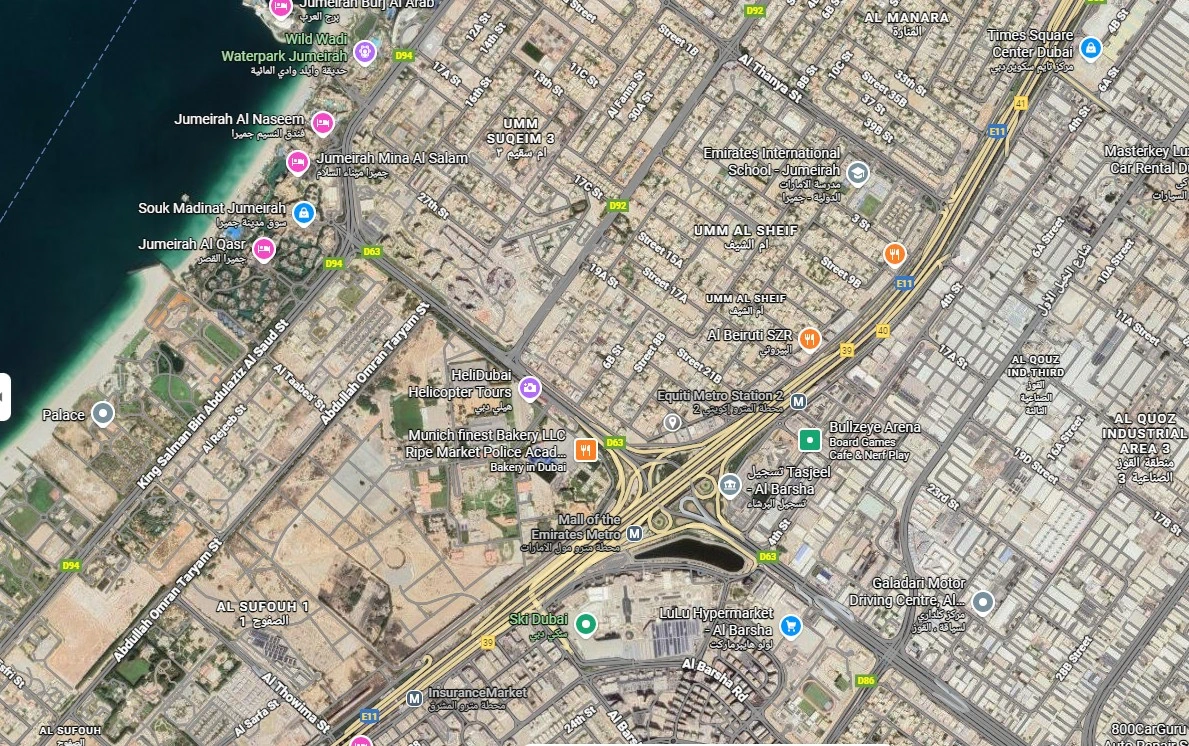
Umm Al Sheif (often written Um/Um Al Sheif) is a compact, high-end residential pocket inside the greater Jumeirah corridor on Dubai’s western coastline. Lined with luxury villas, low-rise townhouses and private gardens, the area combines privacy and prestige with direct access to Dubai’s major leisure and business destinations — making it attractive to both lifestyle buyers and investors.
Location and accessibility
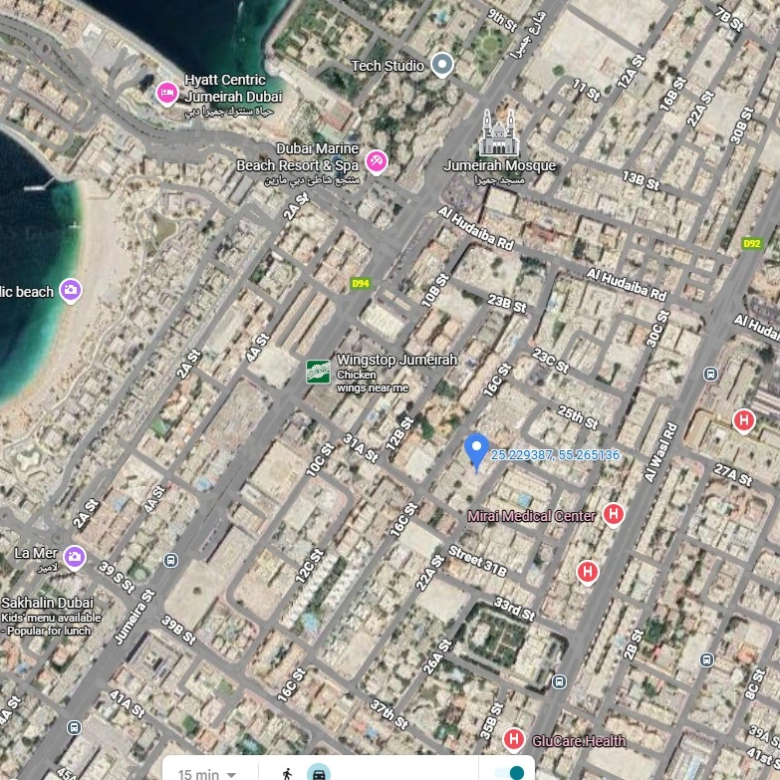
Umm Al Sheif sits between the coastline and key city arteries: Al Wasl Road (D92), Sheikh Zayed Road and nearby Jumeirah Road. That location places it a short drive from the beach and iconic landmarks (Burj Al Arab, Jumeirah Beach), while Sheikh Zayed Road connects residents to Dubai Marina, Downtown Dubai and the financial districts in under 15–25 minutes in typical traffic. The community’s compact street pattern and proximity to main roads make it convenient for both daily commuting and leisure trips.
Residential character and amenities
Umm Al Sheif is predominantly low-density and villa-dominated. Properties range from classic Jumeirah villas to newly rebuilt modern mansions with high-end finishes, landscaped plots and private pools. The area is family oriented — attracting long-term residents seeking quiet streets, private schools and lifestyle conveniences. Local amenities include boutique cafés, private clinics, salons and small retail clusters, while larger malls, restaurants and supermarkets are a short drive away. Several premium interior-design and fit-out projects have been implemented here, underscoring the area’s luxury positioning.
Touristic and cultural importance
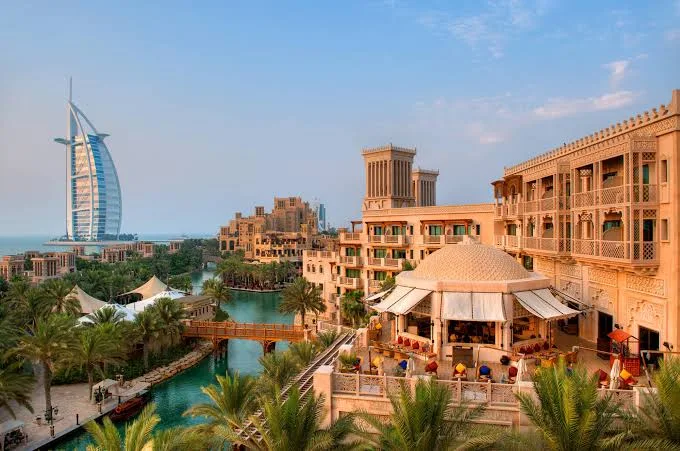
While Umm Al Sheif itself is primarily residential, it benefits strongly from its proximity to Jumeirah’s tourist draws. Visitors and residents enjoy easy access to Jumeirah Beach, the iconic Burj Al Arab, and beachfront hotels and dining. Additionally, Umm Al Sheif hosts the Majlis Ghorfat Umm Al Sheif — a preserved historical summer retreat of the late Sheikh Rashid bin Saeed Al Maktoum — which is a recognized cultural/heritage site and a small but meaningful tourist attraction for visitors interested in Dubai’s history. This mix of beachfront leisure and a cultural landmark enhances the area’s prestige for buyers and short-term visitors.
Commercial and economic relevance
Umm Al Sheif’s economic value is largely location-driven. Its short commute to major business zones (Dubai Media City, Business Bay, DIFC) and to high-footfall leisure areas (Palm Jumeirah, Dubai Marina, JBR) means it serves professionals who want a villa lifestyle but still need city access. The cluster of high-value properties contributes to steady demand in the ultra-prime segment of Dubai’s housing market. Local service businesses (luxury fit-out firms, private contractors, landscaping, concierge and villa management services) also benefit from the concentration of affluent homeowners.
What investors should know — advantages
- Prime location with lifestyle appeal. Proximity to beaches, landmark hotels and central business routes keeps demand for high-end villas steady among local and international buyers seeking prestige addresses. Bayut
- High average property values. Listings and market reports show Umm Al Sheif in the top tier for villa prices in Dubai; recent advertised and transaction figures demonstrate multi-million-dirham values for large plots — a sign of strong capital positioning for premium buyers.
- Targeted tenant and buyer profile. The area appeals to families, diplomats, executives and high-net-worth individuals — a demographic that values long leases and high-quality maintenance, supporting stable rental income for well-positioned assets.
- Refurbishment and redevelopment upside. Many older Jumeirah villas are being replaced with high-end modern builds; investors who buy older stock and rebuild can capture architectural premium and higher rental yields. Examples of recent bespoke villa projects and fit-outs in Umm Al Sheif underscore this trend.
Risks & market context (important)
While Umm Al Sheif remains a desirable micro-market, macro conditions matter. Independent ratings and market reporting in 2024–2025 noted that Dubai’s overall property market — after a strong post-pandemic boom — may face a correction due to large new supply and cooling demand, which could put downward pressure on prices in the near term. Prime locations generally weather cycles better than fringe areas, but investors should factor in potential price volatility, upcoming supply deliveries, financing conditions and transaction timing. Diversified risk analysis and conservative stress testing are recommended.
Practical investment tips
- Do a comparable sales analysis using recent Umm Al Sheif villa transactions and listings — focus on plot size, build quality and finished amenities. Use local portals and brokers for verified sale records.
- Check redevelopment potential and local planning rules (plot coverage, setbacks, building heights) if you plan to rebuild or significantly remodel.
- Budget for premium management & upkeep. Ultra-prime villas require high maintenance; factor service, landscaping, and insurance costs into cash-flow models.
- Consider long-term hold versus short-term flip. Prime villa pockets often reward long holds for capital appreciation and rental stability, while short flips are more sensitive to market cycles.
- Work with niche advisors. Use brokers experienced in Jumeirah villa sales, architects familiar with local codes, and legal counsel who handles freehold transactions and tax planning for international buyers.
Conclusion
Umm Al Sheif is a classic Dubai luxury enclave — small, discreet and strategically placed between the city’s lifestyle and business cores. For investors seeking prime villa exposure, it offers lifestyle appeal, a wealthy tenant pool, and redevelopment opportunities. That said, sound investment decisions should weigh current macro signals and new supply into valuation models. With careful due diligence, Umm Al Sheif can be a resilient addition to a high-net-worth property portfolio in Dubai.