
Prime Residential Plot For joint-venture
- AED55,000
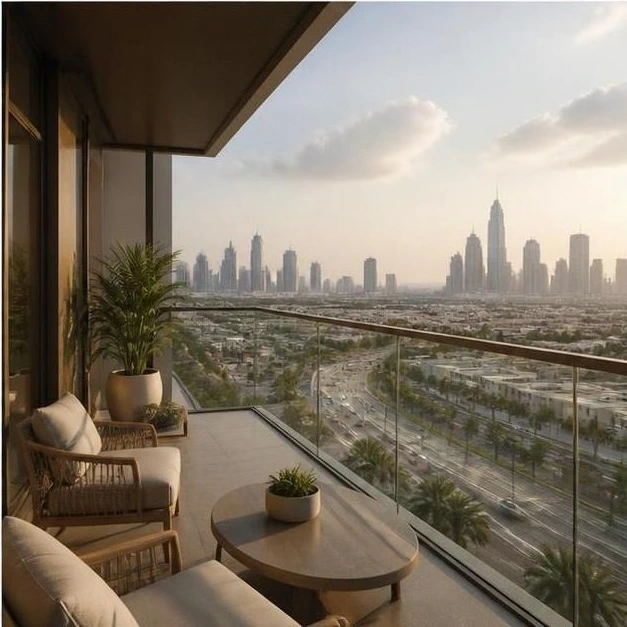
- AED55,000
Overview
- Plot for Sale
- Property Type
- 26000 sqft
- Area Size
- Ready for Build
- Handover
Description
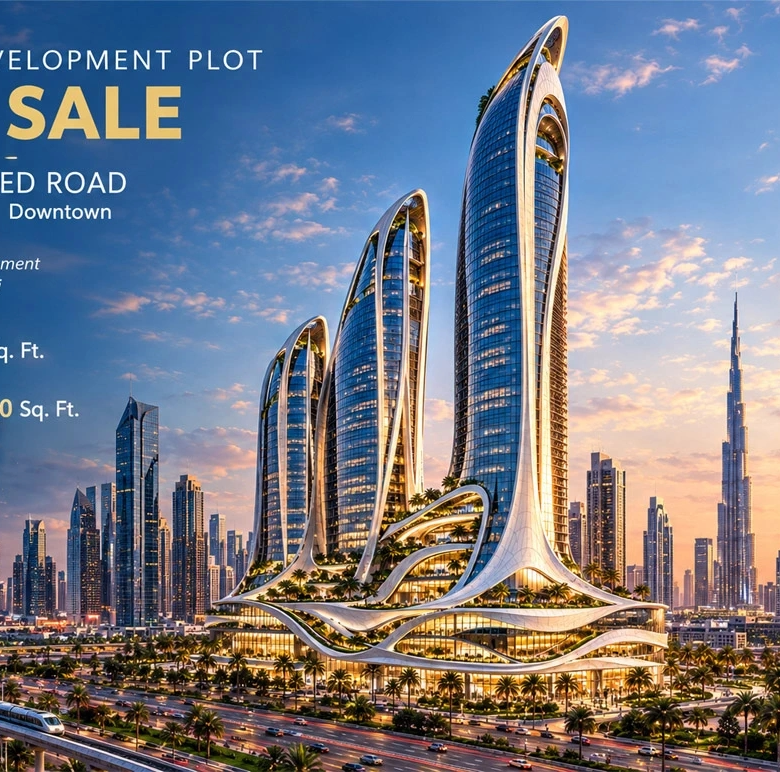
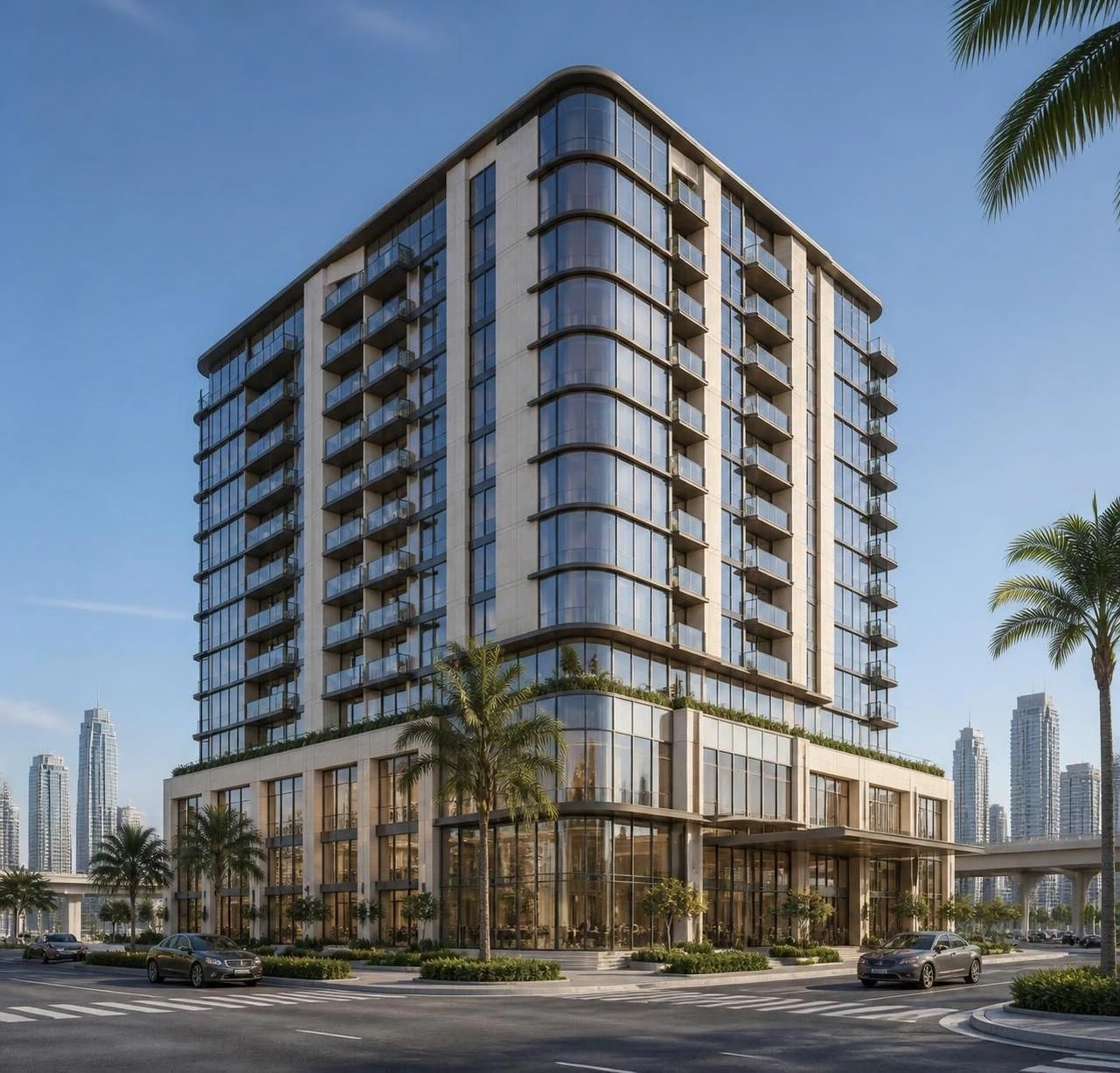
Prime Residential & Retail Plot For joint-venture
Location: Downtown Jebel Ali / SZR – Dubai
ZERO UPFRONT
Plot Size: 26,000 Sq. Ft.
GFA: 156,000 Sq. Ft.
Plot Value : 55 Million
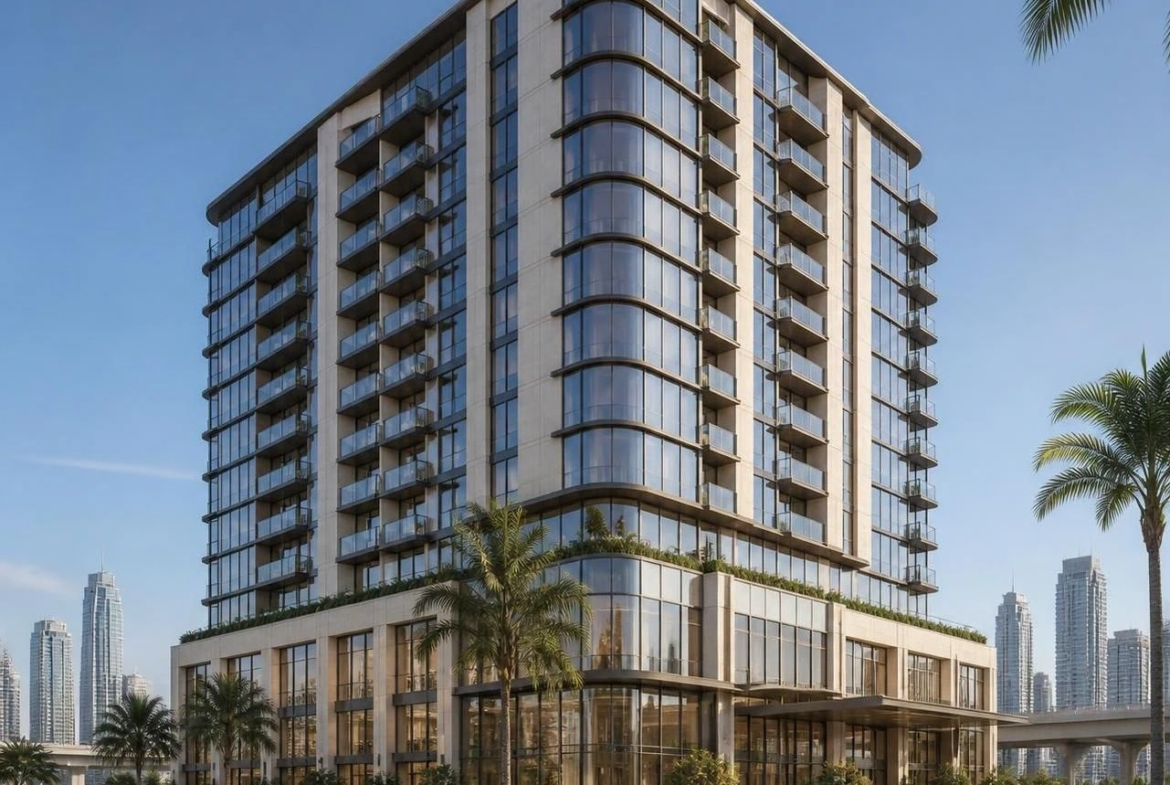
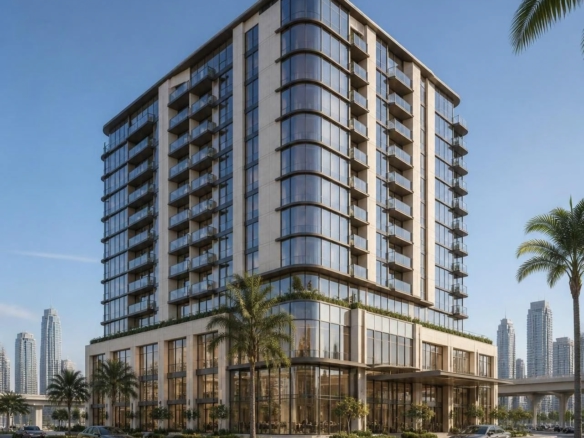
Permitted Height: G + 3 Podium + 14 Floors
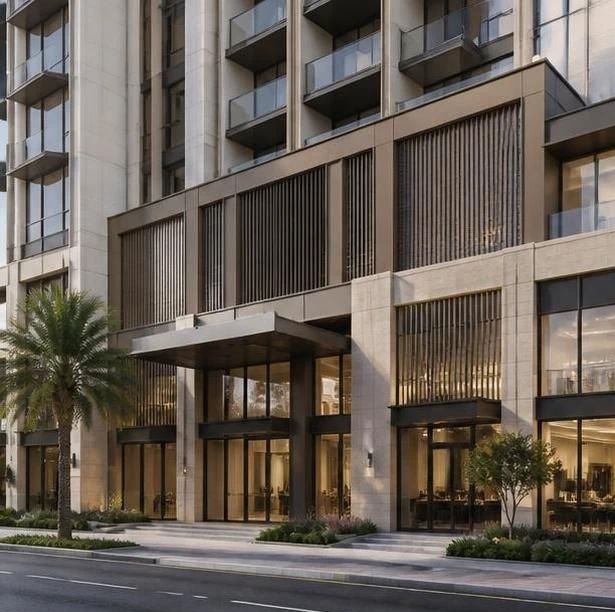
Usage: Residential + Retail
+971507709998
Downtown Jebel Ali and Sheikh Zayed Road: A Strategic Gateway to Dubai’s Future Growth


Introduction
Downtown Jebel Ali and the Sheikh Zayed Road corridor represent one of the most strategically positioned growth areas in Dubai, United Arab Emirates. Their importance goes far beyond residential development. The area sits within a much larger economic ecosystem connecting international trade, logistics, manufacturing, business, tourism, transportation, hospitality and real estate.
Sheikh Zayed Road, officially E11, is one of the principal arteries of Dubai. Moving south from the traditional central business districts, it connects major commercial and residential destinations with Jebel Ali, JAFZA, Jebel Ali Port, Dubai South, Expo City Dubai and the wider southern development corridor.
This strategic position gives Downtown Jebel Ali a distinctive advantage: it combines direct highway accessibility, Metro connectivity, proximity to one of the world’s major maritime trade hubs, large employment centres, expanding residential communities and major tourism destinations.
For investors, this combination creates an interesting long-term proposition, particularly for land, mixed-use developments, residential buildings, commercial properties, hospitality projects and strategically located development plots.
The Strategic Importance of Sheikh Zayed Road
Sheikh Zayed Road is much more than a major highway. It is effectively a development spine of modern Dubai.
The corridor links several of the emirate’s most important economic centres, including Downtown Dubai, Business Bay, Dubai Internet City, Dubai Media City, Dubai Marina, Jumeirah Lakes Towers, Jebel Ali and the southern economic zones.
Dubai’s 2040 urban planning framework identifies Sheikh Zayed Road, Business Bay and Downtown among the emirate’s established economic and trade centres, while also identifying Expo City as an emerging economic and growth centre connected to exhibitions, tourism and logistics. (PDD Portal)
This means that land located along or close to major Sheikh Zayed Road interchanges can benefit from more than local demand. It can potentially serve a much larger population and business ecosystem extending across Dubai.
The road’s importance is strengthened by its relationship with the Dubai Metro. The Jebel Ali Metro Station provides an interchange between the Red Line and Route 2020, creating an important public-transport connection between Jebel Ali and the southern districts of Dubai. (Government of Dubai Media Office)
Downtown Jebel Ali: From Industrial Gateway to Mixed-Use Growth Centre
Downtown Jebel Ali should be viewed within the wider transformation of the Jebel Ali area.
Historically, Jebel Ali became internationally recognised because of its port, industrial facilities and free-zone activities. Today, however, the area is developing into a much broader urban and economic ecosystem.
Residential towers, offices, retail facilities, hotels, schools, services and mixed-use developments are increasingly forming part of the area’s urban fabric.
This transformation is important for real-estate investors because areas that combine employment + transportation + residential demand + commercial activity + infrastructure investment can develop multiple sources of property demand rather than relying on a single market segment.
Downtown Jebel Ali therefore has the potential to function as a bridge between Dubai’s established central districts and its rapidly expanding southern corridor.
Jebel Ali Port: The Economic Engine Behind the Area


One of the strongest reasons for the strategic importance of Jebel Ali is Jebel Ali Port.
According to DP World, the port is a major maritime hub connecting more than 150 ports globally through more than 80 weekly services. (DP World)
In 2024, Jebel Ali Port handled 15.5 million TEUs, its highest container throughput since 2015. The port has annual container capacity of approximately 19.4 million TEUs, more than 100 berths and a 25-kilometre quay. (DP World)
This is not simply a shipping statistic.
A major port generates an extensive economic ecosystem involving:
- Logistics companies
- Importers and exporters
- Distribution companies
- Warehousing
- Transportation
- Freight forwarding
- Customs and trade services
- Manufacturing
- Food and beverage businesses
- Automotive companies
- Construction materials
- Industrial services
- Professional services
- Employee accommodation
- Retail and hospitality
Consequently, property demand around Jebel Ali is supported by a broad economic base.
JAFZA: A Global Business Ecosystem


The second major pillar is the Jebel Ali Free Zone, JAFZA.
In 2025, Dubai Government data highlighted JAFZA’s contribution to Dubai’s trade and investment ecosystem. JAFZA had grown from 19 founding companies in 1985 to more than 11,000 businesses from 157 countries, including more than 100 Fortune 500 companies.
In 2024, JAFZA facilitated approximately AED 713 billion in non-oil trade, while its developed land bank exceeded 539 million square feet. The wider Jebel Ali ecosystem supports more than 160,000 jobs within the free zone. (Protocol Dubai)
This has direct implications for real estate.
Thousands of companies require:
Housing → Offices → Warehouses → Retail → Hotels → Restaurants → Services → Transportation → Schools → Healthcare
The result is an economic cycle that can continuously generate demand for different types of real estate.
For investors, this is particularly important because a property market supported by employment and business activity can have a stronger underlying demand base than a location dependent mainly on speculative residential demand.
Connectivity: One of Downtown Jebel Ali’s Greatest Advantages


Location is one of the most important components of real estate value, and Downtown Jebel Ali benefits from several layers of connectivity.
Sheikh Zayed Road
E11 provides direct north-south road connectivity through Dubai and links the Jebel Ali area with Dubai Marina, Business Bay, Downtown Dubai and other major districts.
Dubai Metro
Jebel Ali Station is an interchange station connecting Route 2020 with the Red Line.
The station was designed for substantial passenger capacity, with a stated capacity of up to 320,000 passengers per day and retail facilities integrated into the station. (RTA)
Route 2020
The 15-kilometre Route 2020 extension connects Jebel Ali with The Gardens, Discovery Gardens, Al Furjan, Jumeirah Golf Estates, Dubai Investment Park and Expo City.
The route was designed with seven stations and was specifically intended to improve connectivity to major residential, commercial and exhibition areas. (RTA)
This creates an important investment principle:
A property located near both a major highway and mass-transit infrastructure can appeal to two different markets: motorists and public-transport users.
Jebel Ali and Dubai’s Southern Growth Corridor
The importance of Jebel Ali cannot be considered independently from the growth of southern Dubai.
The wider corridor includes:
- Jebel Ali
- JAFZA
- Dubai South
- Expo City Dubai
- Dubai Investment Park
- Jumeirah Golf Estates
- Al Furjan
- Dubai Production City and surrounding areas
- Al Maktoum International Airport development zone
- Palm Jebel Ali
This creates a very large interconnected economic region.
The development of Palm Jebel Ali adds another dimension. The approved master plan covers approximately 13.4 square kilometres, with extensive waterfront development and a new growth corridor for the Jebel Ali area. (PDD Portal)
The project is planned around mixed-use, walkable communities, waterfront experiences, hospitality, residential development and tourism.
This is significant because it potentially changes the perception of Jebel Ali from primarily an industrial and logistics destination into a large mixed economic, residential and tourism corridor.
Tourism: Why Jebel Ali Is Becoming More Relevant


Dubai’s tourism sector provides another important demand generator.
Dubai welcomed 19.59 million international overnight visitors in 2025, representing a 5% increase over 2024 and the third consecutive record-breaking year. (Government of Dubai Media Office)
Although Downtown Jebel Ali is not traditionally considered one of Dubai’s central tourism districts, it benefits from being close to several significant leisure and entertainment destinations.
Ibn Battuta Mall
Ibn Battuta Mall is a major themed shopping destination located close to the Jebel Ali corridor. Its architecture and design are based on the journeys of the famous explorer Ibn Battuta. (Visit Dubai)
Dubai Parks and Resorts
Dubai Parks and Resorts is another major attraction in the wider Jebel Ali–Dubai South area, featuring multiple theme parks and more than 100 attractions. (Visit Dubai)
Palm Jebel Ali
The redevelopment of Palm Jebel Ali introduces a completely different tourism and lifestyle proposition based on waterfront living, beaches, hospitality, retail and leisure.
The project is planned across seven interconnected islands, with 16 fronds and more than 90 kilometres of beachfront. (Government of Dubai Media Office)
This combination can strengthen the demand for:
Hotels + serviced apartments + short-term accommodation + restaurants + retail + leisure facilities + residential properties.
Commercial Investment Opportunities
Downtown Jebel Ali and the Sheikh Zayed Road corridor offer several categories of commercial investment.
1. Retail
Retail properties can benefit from residents, employees, visitors and commuters.
Potential concepts include:
- Supermarkets
- Restaurants
- Cafés
- Pharmacies
- Convenience stores
- Professional services
- Fitness centres
- Medical centres
- Specialty retail
Retail located near residential towers, Metro stations or major access roads can have particularly strong strategic value.
2. Offices
The large number of businesses operating within the Jebel Ali ecosystem creates demand for offices ranging from small professional units to larger corporate premises.
Office developments can benefit from proximity to both Sheikh Zayed Road and Metro infrastructure.
3. Warehousing and Logistics
The combination of Jebel Ali Port, JAFZA and road connectivity creates one of the strongest logistics environments in the region.
Demand can include:
- Warehouses
- Distribution centres
- Cold storage
- Light industrial facilities
- Showrooms
- Logistics offices
- Last-mile distribution facilities
4. Hospitality
The area’s business activity, logistics sector, tourism attractions and future waterfront development create opportunities for:
- Business hotels
- Serviced apartments
- Mid-market hotels
- Extended-stay accommodation
- Boutique hospitality
- Staff accommodation
Residential Investment Opportunities


Residential real estate is another important investment category.
The fundamental demand drivers are relatively diverse:
Employees + business owners + professionals + families + investors + visitors + future residents.
Investors may consider:
Apartments
Apartments near Sheikh Zayed Road and Metro stations can potentially appeal to tenants who prioritise commuting convenience.
Serviced Apartments
These can target business travellers, professionals and visitors who require accommodation for longer periods.
Staff Accommodation
Jebel Ali’s industrial and logistics economy creates a significant workforce, supporting demand for professionally managed staff accommodation where permitted and appropriately licensed.
Residential Buildings
Investors seeking larger transactions may consider entire residential buildings rather than individual units.
This can provide greater control over the asset, leasing strategy, refurbishment and eventual exit.
Land: Potentially the Most Strategic Investment Category
For sophisticated investors and developers, development land may offer an especially interesting opportunity.
The reason is simple: land provides the possibility of creating value rather than merely purchasing an existing income-producing asset.
A strategically positioned plot near Sheikh Zayed Road can potentially be developed into:
- Residential towers
- Mixed-use buildings
- Commercial buildings
- Hotels
- Serviced apartments
- Retail centres
- Offices
- Staff accommodation
- Logistics facilities
- Joint-venture developments
However, land investment requires much deeper due diligence than purchasing a completed property.
Investors should verify:
Plot ownership → title deed → zoning → permitted use → plot ratio → GFA → height → setbacks → parking requirements → infrastructure → access → development approvals → NOCs → development costs → financing → exit strategy.
The asking price of a plot should therefore never be considered in isolation.
The more important question is:
What can legally and economically be developed on the land?
Joint Ventures: A Powerful Model for Large Landowners and Developers
The Jebel Ali corridor may also be suitable for joint-venture development structures.
A landowner may contribute the land while a developer contributes:
- Development expertise
- Financing
- Design
- Construction management
- Marketing
- Sales
- Project management
The parties can then share the completed development or its revenues according to an agreed structure.
For large strategic plots, this can be attractive because it allows landowners to participate in development without necessarily selling the land outright.
A properly structured joint venture should clearly establish:
- Land valuation
- Development responsibilities
- Financing obligations
- Construction responsibilities
- Sales and marketing
- Profit distribution
- Decision-making authority
- Exit provisions
- Default provisions
- Completion deadlines
- Security mechanisms
- Regulatory approvals
Why the Sheikh Zayed Road Frontage Matters
Not all land in the same geographical district has equal investment value.
A plot directly visible from Sheikh Zayed Road may have a very different commercial potential from a plot located several streets away.
Visibility can be particularly important for:
- Hotels
- Corporate headquarters
- Showrooms
- Retail
- Mixed-use developments
- Landmark buildings
For a developer, frontage, visibility, access and permitted development density can sometimes be as important as the absolute size of the land.
This is why professional investors should evaluate a plot based on its complete development profile rather than simply its square-foot price.
The Relationship Between Trade and Real Estate
One of the most important characteristics of the Jebel Ali area is the relationship between trade and property.
Consider the economic chain:
International Trade → Port → Free Zone → Companies → Employees → Housing → Retail → Services → Hotels → Offices → Commercial Property → Land Development
This creates a circular economic ecosystem.
A company established in JAFZA may require warehouse space.
Its employees require accommodation.
Those employees purchase goods and services.
Businesses open restaurants, shops and service companies.
Companies require offices.
Visitors require hotels.
Developers respond by building residential, commercial and hospitality properties.
This is one of the reasons why the Jebel Ali area should be evaluated as an economic ecosystem rather than simply a residential district.
Future Growth and the Dubai 2040 Vision
Dubai’s long-term planning provides an additional layer to the investment story.
The Dubai 2040 Urban Master Plan is designed to guide sustainable urban growth, infrastructure, population distribution and investment opportunities across the emirate. (PDD Portal)
The southern part of Dubai is increasingly important within this long-term vision.
The combination of:
Jebel Ali Port + JAFZA + Sheikh Zayed Road + Metro + Expo City + Dubai South + Al Maktoum International Airport + Palm Jebel Ali
creates a powerful geographic corridor.
It is therefore reasonable to view Downtown Jebel Ali as part of a larger long-term development story, rather than as an isolated neighbourhood.
Investment Strategies for Different Investors
Different investors should approach the area differently.
Conservative Investor
Focus on established income-producing properties with:
- Strong occupancy
- Good access
- Established tenants
- Reliable rental history
- Clear title
- Limited development risk
Value Investor
Look for properties or land where the current price does not fully reflect the potential of the location.
This could include older buildings requiring refurbishment or strategically located plots.
Developer
Focus on:
- Development land
- High-density plots
- Mixed-use opportunities
- Hotel sites
- Residential development
- Commercial projects
The key is to analyse the permitted GFA and potential development economics.
Institutional Investor
Larger investors may consider:
- Large development plots
- Build-to-rent residential projects
- Logistics facilities
- Warehousing
- Hospitality
- Mixed-use master developments
- Joint ventures
International Investor
The attraction is the combination of Dubai’s global investment environment with a location connected to international trade, tourism, transportation and infrastructure.
The Most Important Investment Advantages
The strategic investment case for Downtown Jebel Ali can be summarised in several points:
1. Strategic highway connectivity
Direct relationship with Sheikh Zayed Road and the wider Dubai road network.
2. Metro connectivity
Jebel Ali Station connects the area with the Red Line and Route 2020. (RTA)
3. Global trade
Jebel Ali Port connects Dubai to international maritime trade and handled 15.5 million TEUs in 2024. (DP World)
4. Major business ecosystem
JAFZA hosts more than 11,000 companies from 157 countries. (Protocol Dubai)
5. Employment base
The Jebel Ali economic ecosystem supports a very large workforce, creating underlying housing and service demand.
6. Tourism
Ibn Battuta Mall, Dubai Parks and Resorts, Expo City and future Palm Jebel Ali developments strengthen the wider tourism proposition. (Visit Dubai)
7. Long-term urban expansion
The area is positioned within Dubai’s broader southern growth corridor and long-term urban planning framework.
8. Diverse real estate opportunities
Residential, commercial, retail, hospitality, logistics, industrial and development land can all play a role.
What Investors Should Check Before Buying
Despite its strong fundamentals, location alone does not guarantee investment performance.
Before purchasing any property or plot in Downtown Jebel Ali or along Sheikh Zayed Road, investors should conduct detailed due diligence.
Important questions include:
- Is the property freehold or leasehold?
- What is the exact title-deed status?
- What is the permitted land use?
- What is the permitted height?
- What is the permitted GFA?
- What are the setback requirements?
- Is there direct road access?
- Is the property close to a Metro station?
- Are there development restrictions?
- Are there existing mortgages or encumbrances?
- What infrastructure is already available?
- What are the construction costs?
- What is the expected rental income?
- What is the realistic sales value?
- Who are the competing developments?
- What is the expected development timeline?
- What is the exit strategy?
For development land, the most important financial analysis should normally be based on residual land value, development cost, expected sales or rental revenue and the developer’s required return.
Downtown Jebel Ali: A Different Type of Dubai Investment Story
Downtown Jebel Ali is not simply competing with Downtown Dubai, Business Bay or Dubai Marina—and it should not necessarily be evaluated using exactly the same criteria.
Its investment identity is different.
Downtown Dubai is primarily a global luxury, tourism and business destination.
Dubai Marina is strongly associated with waterfront residential and lifestyle demand.
Business Bay is a major commercial and mixed-use centre.
Jebel Ali is fundamentally a trade, logistics, industrial, residential, commercial and increasingly tourism-oriented ecosystem.
Its strength comes from the interaction between these sectors.
That is precisely what makes the area strategically interesting.
Conclusion: A Gateway Between Dubai’s Present and Future
Downtown Jebel Ali and Sheikh Zayed Road represent one of the important strategic corridors in Dubai’s continuing expansion.
The area’s significance is built on a rare combination of infrastructure and economic activity:
Sheikh Zayed Road + Dubai Metro + Jebel Ali Port + JAFZA + logistics + manufacturing + residential communities + tourism + Expo City + Dubai South + Palm Jebel Ali.
Jebel Ali Port gives the area global trade connectivity. JAFZA creates a substantial international business ecosystem. Sheikh Zayed Road provides regional accessibility. The Metro provides mass transportation. Tourism destinations create additional visitor demand. New waterfront and southern-Dubai developments introduce another layer of long-term residential, commercial and hospitality potential.
For real estate investors, the greatest opportunity may therefore not be limited to buying an apartment.
The broader opportunity is to identify strategically positioned land, buildings, commercial properties, development plots and joint-venture opportunities that can benefit from the area’s transition from a predominantly industrial gateway into a diversified economic and urban centre.
In the long term, the value proposition of Downtown Jebel Ali can be expressed in one sentence:
It is a location where Dubai’s global trade infrastructure, transportation network, business economy, tourism industry and future urban expansion converge.
For investors looking at Dubai beyond the traditional prime districts, Downtown Jebel Ali and the Sheikh Zayed Road corridor deserve serious consideration as part of the emirate’s next generation of strategic real-estate opportunities.
Investment decisions should nevertheless be based on the specific property’s title, permitted use, development parameters, market value, transaction structure and independent legal and financial due diligence. The existence of infrastructure or planned development does not guarantee a particular return on investment.
Address
Open on Google Maps- City: Dubai
- Country: United Arab Emirates
Details
- Price AED55,000
- Property Size 26000 sqft
- Handover Ready for Build
- Property Type Plot for Sale
- Property Status Joint Venture
Contact Information
View ListingsSimilar Listings
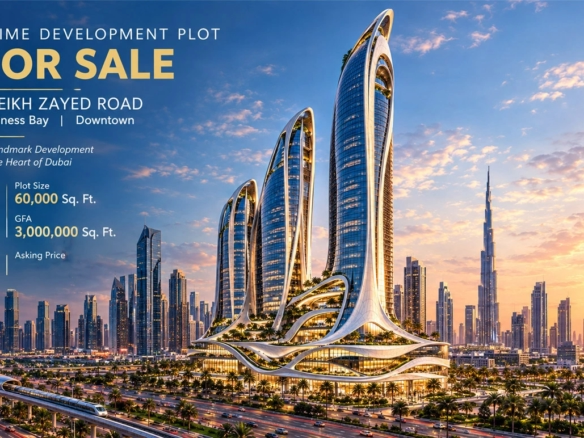
Land for sale in Sheikh Zayed Road – Dubai
- Ask for Price
- 60,000 sqft
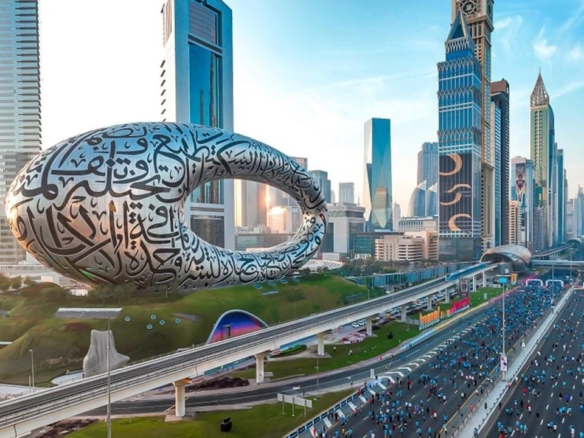
Plot for sale in Sheikh Zayed Road Dubai
- AED650,000,000
- 15,000 sqft
- GFA: 720000