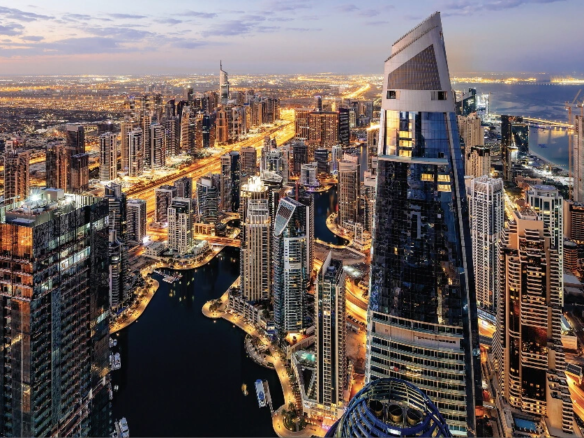

Dubai has evolved into one of the world’s most sophisticated destinations for luxury residential architecture. Its high-end villas are no longer defined simply by impressive size, expensive materials, or grand entrances. In 2026, luxury villa design in Dubai increasingly combines architectural identity, privacy, wellness, advanced technology, sustainability, resort-style outdoor living, and carefully integrated interior spaces.
From the waterfront residences of Palm Jumeirah and Jumeirah to the private estates of Emirates Hills and the contemporary communities of Dubai Hills Estate, Dubai offers an extraordinary spectrum of architectural styles. Each neighborhood presents a different interpretation of luxury, shaped by its location, landscape, views, privacy requirements, and lifestyle.
Dubai’s architectural transformation is also closely connected with its long-term urban vision. The Dubai 2040 Urban Master Plan places greater emphasis on sustainable development, green and recreational spaces, environmental quality, accessibility, and vibrant communities. These principles are increasingly reflected in the design of premium residential properties.
The Evolution of Luxury Villas in Dubai
Luxury villas in Dubai have undergone a remarkable transformation over the past decade.
Traditional concepts of oversized rooms, elaborate ornamentation, and imposing façades are increasingly being complemented—or replaced—by more sophisticated architectural approaches. Contemporary luxury focuses on proportion, natural light, privacy, landscape integration, intelligent technology, material quality, and the relationship between indoor and outdoor spaces.
The result is a new generation of villas where architecture becomes part of the lifestyle.
Large glazed façades, shaded terraces, landscaped courtyards, infinity pools, private wellness areas, cinema rooms, smart-home systems, designer kitchens, private offices, underground parking, and carefully planned entertainment spaces are increasingly incorporated into bespoke residences.
At the highest level of the market, the villa is no longer simply a home. It becomes a private residential experience.
Major High-End Villa Styles in Dubai
1. Contemporary Luxury Villas
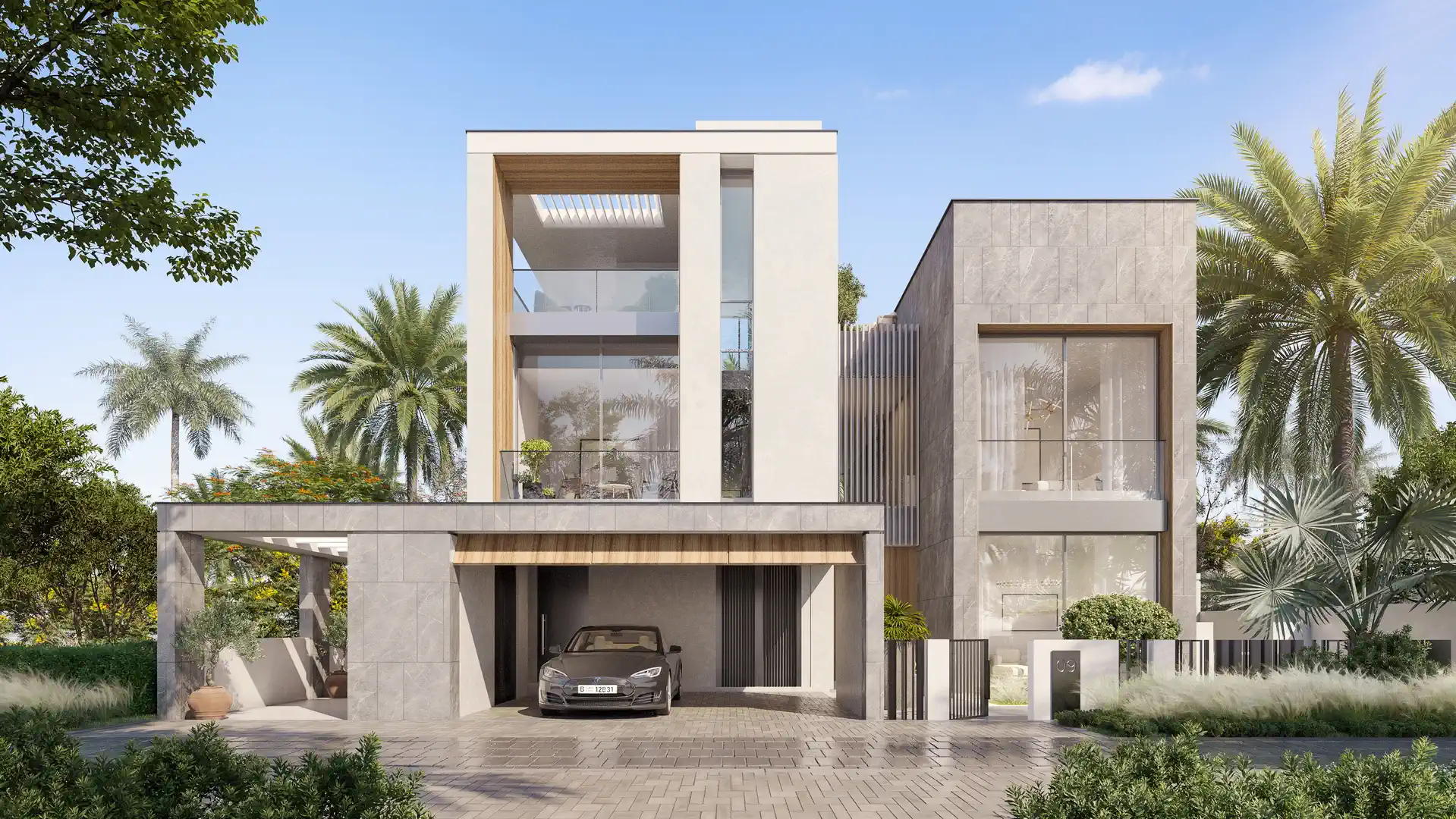
Contemporary villas represent one of the strongest architectural directions in Dubai’s premium residential market.
Their defining characteristics often include clean geometric forms, expansive glazing, cantilevered volumes, large terraces, minimalist landscaping, natural stone, timber, metal, and carefully controlled architectural lighting.
The architecture is generally designed around openness and visual continuity. Living areas can extend directly towards gardens, terraces and swimming pools, creating a seamless transition between interior and exterior environments.
Contemporary villas are particularly suited to waterfront locations and prestigious communities where views and outdoor living are major components of the property’s value.
Recent Dubai villa projects demonstrate increasingly sophisticated combinations of stone, timber, glass, shaded architectural planes and landscaped spaces rather than relying solely on decorative luxury.
2. Modern Minimalist Villas
Modern minimalist villas take simplicity to another level.
Instead of excessive decoration, the architecture depends on strong proportions, carefully selected materials, clean lines and controlled detailing.
Typical features include:
- Floor-to-ceiling windows
- Floating architectural volumes
- Flat or concealed rooflines
- Natural stone façades
- Neutral colour palettes
- Integrated lighting
- Minimalist landscaping
- Open-plan interiors
- Sculptural staircases
- Large shaded terraces
The objective is not to make the villa appear empty, but to create a calm and sophisticated environment where architecture, light, materials and proportions become the primary forms of decoration.
This approach aligns particularly well with the growing international interest in quiet luxury, where exclusivity is communicated through craftsmanship and architectural quality rather than excessive ornamentation.
3. Waterfront and Beachfront Villas
Waterfront villas remain among Dubai’s most prestigious residential properties.
Palm Jumeirah, Jumeirah, Pearl Jumeirah and other coastal locations allow architects to design around the sea, creating homes where the view becomes an integral component of the architecture.
A successful waterfront villa typically maximises:
- Sea views
- Natural daylight
- Privacy
- Outdoor entertaining
- Pool and beach connectivity
- Shaded terraces
- Indoor-outdoor movement
- Sunset and skyline perspectives
Contemporary Palm Jumeirah projects increasingly treat terraces, pools, gardens and waterfront areas as extensions of the internal living spaces. A 2025 Palm Jumeirah villa project, for example, emphasises layered horizontal planes, deep overhangs, natural stone, timber and full-height glazing to create a stronger connection between architecture and the surrounding landscape.
This approach is especially relevant in Dubai, where outdoor living can remain an important part of the lifestyle for much of the year.


6
4. Arabian Contemporary Villas
Dubai’s luxury architecture is not exclusively Western or minimalist.
Another important category combines contemporary architecture with elements inspired by traditional Arabian design.
These residences may incorporate:
- Courtyard layouts
- Arched openings
- Decorative screens
- Mashrabiya-inspired elements
- Natural stone
- Water features
- Deep shaded passages
- Private gardens
- Warm architectural lighting
The result is an architectural language that combines modern functionality with regional identity.
For international buyers seeking a property that feels distinctly connected to the UAE, Arabian contemporary design can provide a compelling alternative to purely international architectural styles.
5. Mediterranean and European-Inspired Villas
Mediterranean-inspired villas remain popular among buyers who prefer softer architectural forms.
These homes often feature:
- Stone façades
- Arched windows
- Terracotta-inspired details
- Large terraces
- Landscaped gardens
- Classical proportions
- Decorative columns
- Courtyard spaces
- Water features
Modern interpretations are generally more restrained than traditional Mediterranean architecture, combining European character with contemporary interiors and modern infrastructure.
6. Ultra-Contemporary Signature Villas
At the highest end of Dubai’s residential market, some villas are effectively designed as architectural statements.
These signature residences may be individually commissioned for a specific owner and designed around a particular plot, view, lifestyle or collection of requirements.
They can incorporate extraordinary features such as:
- Private spas
- Wellness suites
- Home cinemas
- Private gyms
- Wine cellars
- Entertainment lounges
- Rooftop terraces
- Private offices
- Car galleries
- Underground garages
- Smart-home command systems
- Bespoke furniture
- Art installations
- Private landscaped courtyards
Some existing Palm Jumeirah residences demonstrate how luxury villas can incorporate advanced home technology, entertainment areas, wellness facilities, multiple kitchens and highly customised interiors.
At this level, architecture becomes highly personalised rather than simply following a predefined villa style.
The Rise of Indoor-Outdoor Living
One of the most important characteristics of contemporary Dubai villa architecture is the elimination of the traditional boundary between indoor and outdoor spaces.
Living rooms increasingly open directly onto terraces. Kitchens connect with outdoor dining areas. Bedrooms can have private gardens or terraces. Swimming pools become architectural focal points rather than separate recreational features.
This creates a resort-like residential environment.
In premium waterfront properties, this relationship becomes even more important because the architecture is often designed specifically to frame the sea, skyline or landscape.


8
Smart Homes and Intelligent Villa Technology
Luxury in 2026 is increasingly measured by what a property can do, not simply by how it looks.
Smart-home technology has become an increasingly important component of high-end villa design.
Modern systems can integrate:
- Lighting
- Air conditioning
- Security
- Access control
- Curtains and blinds
- Audio systems
- Home cinema
- Pool systems
- Irrigation
- Energy monitoring
- Temperature control
- Automated shading
The most sophisticated residences aim to make technology almost invisible.
Rather than filling rooms with visible equipment, systems are integrated into the architecture so that residents can control the environment through centralised interfaces or automated routines.
This is particularly valuable in Dubai, where efficient cooling, shading and environmental control can contribute significantly to comfort.
Wellness as a New Luxury Standard
The definition of luxury residential property is also changing.
A premium villa is increasingly expected to support physical wellbeing, privacy and relaxation.
Wellness-oriented villas may include:
- Private gyms
- Spa rooms
- Saunas
- Steam rooms
- Treatment rooms
- Yoga studios
- Meditation spaces
- Cold-plunge facilities
- Indoor relaxation areas
- Landscaped wellness gardens
This represents a broader shift from traditional luxury toward wellness-driven living.
The villa is designed not only to accommodate residents, but also to create an environment that supports their daily lifestyle.
Sustainable Luxury Villa Design
Sustainability is becoming increasingly relevant to Dubai’s future development.
The Dubai 2040 Urban Master Plan specifically emphasises environmental sustainability, green spaces, efficient infrastructure, and improved environmental quality. It also targets a substantial expansion of green and recreational areas across the emirate.
For luxury villas, sustainability can be incorporated through:
- High-performance glazing
- Solar-energy systems
- Efficient air-conditioning
- Smart energy management
- Water-efficient landscaping
- Automated irrigation
- Shading systems
- Thermal insulation
- Native and climate-appropriate planting
- Energy-efficient lighting
- Water recycling technologies where appropriate
Importantly, sustainable design does not have to compromise luxury.
Modern architecture can combine energy efficiency with expansive glazing, sophisticated landscaping, premium materials and exceptional comfort.
Landscaping as an Architectural Element
In today’s luxury villa market, landscaping is no longer an afterthought.
The garden is increasingly considered part of the architecture.
Landscape design can create:
- Private courtyards
- Green entrances
- Outdoor lounges
- Tropical gardens
- Water features
- Sculptural planting
- Poolside environments
- Shaded dining areas
- Rooftop gardens
- Outdoor kitchens
In large private estates, landscaping can also be used strategically to enhance privacy and create separate zones for family life, entertainment and relaxation.
This approach complements Dubai’s broader urban vision of expanding green and recreational environments.
Prime Dubai Locations for High-End Villas
Palm Jumeirah
Palm Jumeirah remains synonymous with waterfront luxury.
Its villas benefit from beachfront settings, sea views, private pools and proximity to Dubai’s major hospitality and entertainment destinations.
Architecture here is frequently designed around the water, with expansive glazing, terraces and carefully controlled privacy.
Recent Palm projects continue to demonstrate sophisticated contemporary approaches to beachfront architecture.
Emirates Hills
Emirates Hills occupies a unique position within Dubai’s luxury villa landscape.
The community is characterised by large custom-built residences, landscaped streets, golf-course surroundings and extensive private plots. Emaar describes plots in the community as ranging approximately from 12,000 to 45,000 square feet.
This environment is particularly suitable for owners seeking substantial private estates rather than compact luxury residences.
Dubai Hills Estate
Dubai Hills Estate represents a newer generation of master-planned luxury residential living.
The community combines villas with extensive greenery, parks, golf facilities, retail, education and healthcare amenities.
New premium villa concepts are also demonstrating how contemporary architecture and designer interiors are being integrated into Dubai’s evolving residential landscape. Emaar’s Palm Hills, for example, features large five-bedroom villas with interiors designed by Elie Saab.


6
Jumeirah
Jumeirah continues to appeal to buyers who value established prestige, privacy, central accessibility and proximity to Dubai’s coastline.
The area supports a broad spectrum of villa architecture, from modern minimalist residences to large bespoke family mansions.
Other Emerging Luxury Destinations
Dubai’s luxury villa landscape is also expanding beyond traditional prime districts.
Depending on the project and development stage, areas such as Dubai Islands, Palm Jebel Ali, MBR City and other master-planned destinations are creating new opportunities for bespoke residential architecture.
The continuing expansion of Dubai’s urban infrastructure and long-term development strategy is expected to create additional high-end residential opportunities across different parts of the emirate. The Dubai 2040 framework specifically supports multiple urban centres and broader economic and residential development.
Luxury Villas as Real Estate Investments
For investors, architectural quality is only one component of a villa’s value.
The strongest properties generally combine:
Prime Location + Architectural Quality + Land Value + Privacy + Scarcity + Lifestyle Appeal
Waterfront frontage, large plots, unobstructed views, exceptional architecture and limited supply can significantly differentiate one villa from another.
For this reason, investors should evaluate a luxury villa beyond its built-up area.
Important considerations include:
- Plot size
- Built-up area
- Land-to-built-up ratio
- Location
- Orientation
- Waterfront or golf views
- Privacy
- Parking
- Construction quality
- Renovation potential
- Smart-home infrastructure
- Landscaping
- Pool design
- Community amenities
- Future surrounding developments
- Ownership structure
- Rental potential
- Long-term resale appeal
A beautifully designed villa in the wrong location may not perform as well as a well-positioned property with superior land value and scarcity.
What Defines a Truly Exceptional Villa?
In 2026, the definition of an exceptional Dubai villa is becoming more sophisticated.
It is not simply about having the largest house or the most expensive materials.
A truly exceptional residence should achieve a balance between:
Architecture, Location, Privacy, Technology, Wellness, Sustainability and Lifestyle.
The best villas feel effortless.
Natural light enters exactly where it is needed. Views are carefully framed. Outdoor spaces become extensions of the interior. Technology operates quietly in the background. Landscaping creates privacy without sacrificing openness.
Materials are selected for longevity rather than fashion.
And every architectural element contributes to the overall experience.
The Future of Luxury Villa Architecture in Dubai
Dubai’s luxury residential architecture is entering an increasingly sophisticated phase.
Future villas are likely to become more personalised, technologically advanced, environmentally responsive and wellness-oriented.
The influence of artificial intelligence, smart-building systems, advanced materials, energy management and bespoke architectural fabrication is likely to become increasingly visible throughout the luxury residential sector.
At the same time, Dubai’s long-term urban strategy is placing greater emphasis on sustainability, quality of life, green environments, mobility and integrated communities.
This means that the luxury villa of the future will not necessarily be defined by extravagance alone.
Instead, the most desirable properties are likely to combine architectural excellence with intelligent functionality and enduring value.
Choosing the Right Luxury Villa in Dubai
For buyers searching for a high-end villa, the selection process should begin with lifestyle requirements rather than architecture alone.
A waterfront buyer may prioritise direct beach access and panoramic views.
A family may prioritise privacy, gardens, schools and community facilities.
An investor may focus on land scarcity, capital appreciation and resale liquidity.
Another buyer may want a fully customised residence designed around wellness, entertainment and technology.
Dubai’s diverse villa market makes all of these possibilities achievable.
The key is identifying the right location, property type, architectural style and investment strategy before making a purchase decision.
Conclusion
Dubai’s high-end villas represent far more than luxury homes. They reflect the emirate’s evolution into a global centre for architecture, investment, hospitality and sophisticated living.
From the waterfront architecture of Palm Jumeirah to the private estates of Emirates Hills and the contemporary communities of Dubai Hills Estate, each destination offers its own interpretation of residential excellence.
In 2026, the most compelling luxury villas increasingly combine bespoke architecture, intelligent technology, wellness, sustainability, privacy, exceptional landscaping and prime locations.
For discerning buyers and investors, this evolution creates a broader range of opportunities—and makes architectural quality an increasingly important component of long-term residential value.
Palmyra Properties provides professional real estate guidance for buyers and investors seeking exceptional villas, land, development opportunities and premium residential properties across Dubai and the UAE.